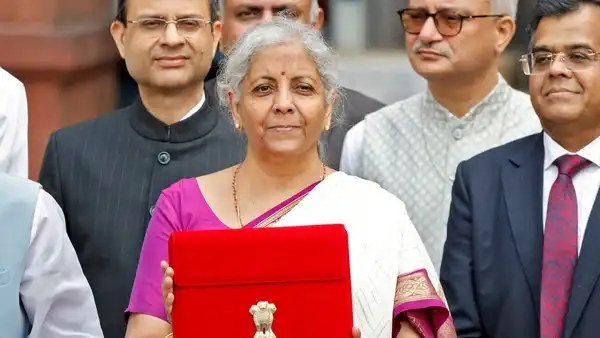
Even though there is a lot of discussion outside the Parliament before the presentation of the Union Budget, its preparation takes place in complete secret and privacy inside the North Block. Finance Minister Nirmala Sitharaman will present the Union Budget for the ninth consecutive time on February 1, 2026, but a large part of its months-long preparation takes place in a top-secret environment. The budget is not just a database of expenses and earnings; It is a document that reflects the economic priorities, tax structure, subsidies of the government and impacts the pockets of common citizens.
Why is it so important to keep the budget secret?
Very few people know that the first budget of independent India was presented on November 26, 1947. It is very important to keep the budget secret before it is presented in Parliament because premature leaking of its contents can have a deep impact on the markets, stock market and policy decisions. Something similar happened in 1950 when the budget to be presented in the House was leaked ahead of time.
The budget was leaked in 1950
The importance of keeping the budget secret became clear when many important documents related to it were leaked in 1950. At that time, the budget was printed at Rashtrapati Bhavan (the official residence of the President). In the early days of the Republic of India, on February 28, 1950, parts of the budget speech of the then Finance Minister John Mathai are believed to have been leaked before it was presented in Parliament. This budget leak controversy escalated so much that Mathai had to resign from his post.
Many rules changed after 1950
This incident clearly told the government that any carelessness with a sensitive document like the budget can prove to be very costly for both the market and the government. After this controversy, two major changes were made. First, the entire process of printing the budget was shifted from Rashtrapati Bhavan, first to the press at Minto Road and later to the government press in North Block. Second, strict protocols were made to keep all budget-related information within the reach of a limited number of people, which later changed into the framework of ‘lock-in period’. What is ‘lock-in period’? During the ‘lock-in period’, officials and staff involved in preparing and printing budget documents are almost completely cut off from the outside world. The ‘lock-in period’ is the backbone of the secrecy of the budget. As soon as the process of making the final draft of the budget begins, selected officials and staff of the Finance Ministry and the press are confined to a specific area inside the North Block.
No home…no mobile phone
During this time, they cannot go home nor meet anyone from outside. The use of mobile phones, personal phones, the Internet, and in some cases, other electronic devices is also prohibited. Contact with family is possible only in very limited ways. This situation continues until the Finance Minister gives the budget speech in Parliament and the documents are formally made public.