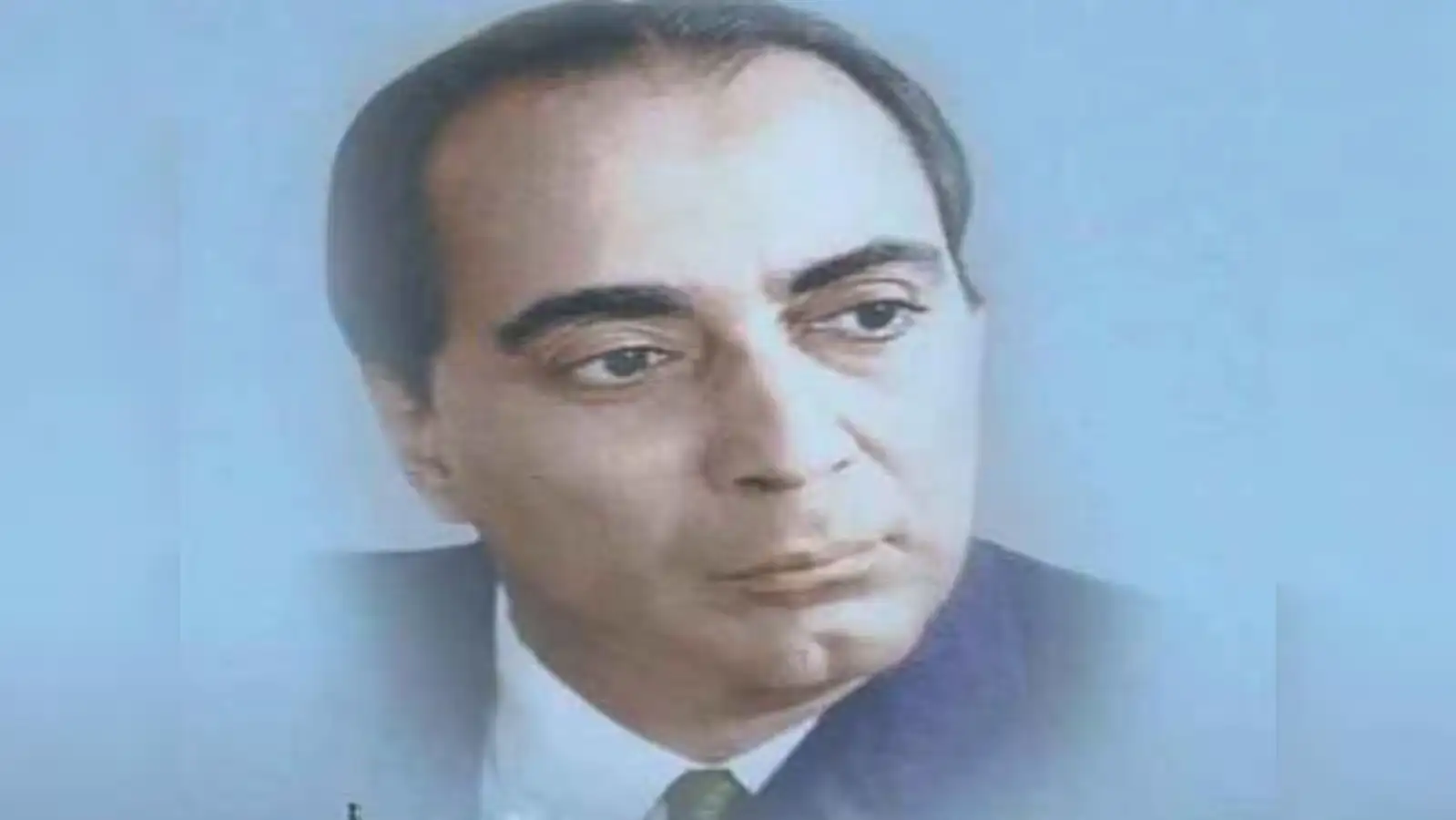
Dr. Homi Jehangir Bhabha, the father of India’s nuclear programme, is often called India’s Oppenheimer. A visionary scientist, institution builder and strategic thinker, Bhabha shaped India’s nuclear energy roadmap at a time when the newly independent country was struggling for technological self-reliance. His sudden death in a plane crash in 1966 still raises questions six decades later: was it a tragic accident or a deliberate conspiracy?
Mont Blanc plane crash of 1966
On January 24, 1966, Air India flight Kangchenjunga was en route from Mumbai to New York with scheduled stops in Europe. A Boeing 707 crashes into Mont Blanc in the French Alps, killing all 117 people on board. Dr. Bhabha was one of the passengers; He was on his way to Vienna to attend a meeting of the International Atomic Energy Agency.
The official French investigation concluded that the accident was caused by a navigation error. According to reports, miscommunication between the cockpit and air traffic control caused the plane to descend below a safe altitude in poor weather conditions, causing it to crash into a mountain.
Why the official explanation didn’t satisfy everyone
Several aspects of the accident raised suspicion. The aircraft was piloted by Captain J.T. D’Souza, one of Air India’s most experienced pilots. This led many experts to believe that the probability of a navigational error was very low. More importantly, the aircraft’s black box was never recovered, and debris was scattered over a large area, which some believe may indicate an air explosion rather than a failure of a controlled landing.
nuclear angle
The most prominent theory surrounding Bhabha’s death points to the involvement of foreign intelligence agencies. In the book “Conversations with the Crow”, American author Gregory Douglas quotes former CIA officer Robert Crowley as claiming that a bomb was planted in the cargo hold of the plane to stop India’s nuclear ambitions. Although this claim has never been officially confirmed, it has attracted attention due to the geopolitical context of the time.
Just weeks before his death, Dr. Bhabha had publicly stated that India could build an atomic bomb within 18 months if political approval was granted. Some analysts believe that some big western powers became worried by this statement given after the India-Pakistan war of 1965.
Dr. Bhabha’s scientific legacy
Dr. Bhabha made important contribution to science and nation building. He founded the Tata Institute of Fundamental Research and became the Chairman of the Atomic Energy Commission, laying the foundation of India’s nuclear ecosystem. Their three-stage nuclear programme, based on India’s vast thorium reserves, remains the cornerstone of the country’s long-term energy strategy. His work on electron-positron interactions in physics led to the discovery of what is now known as Bhabha scattering.