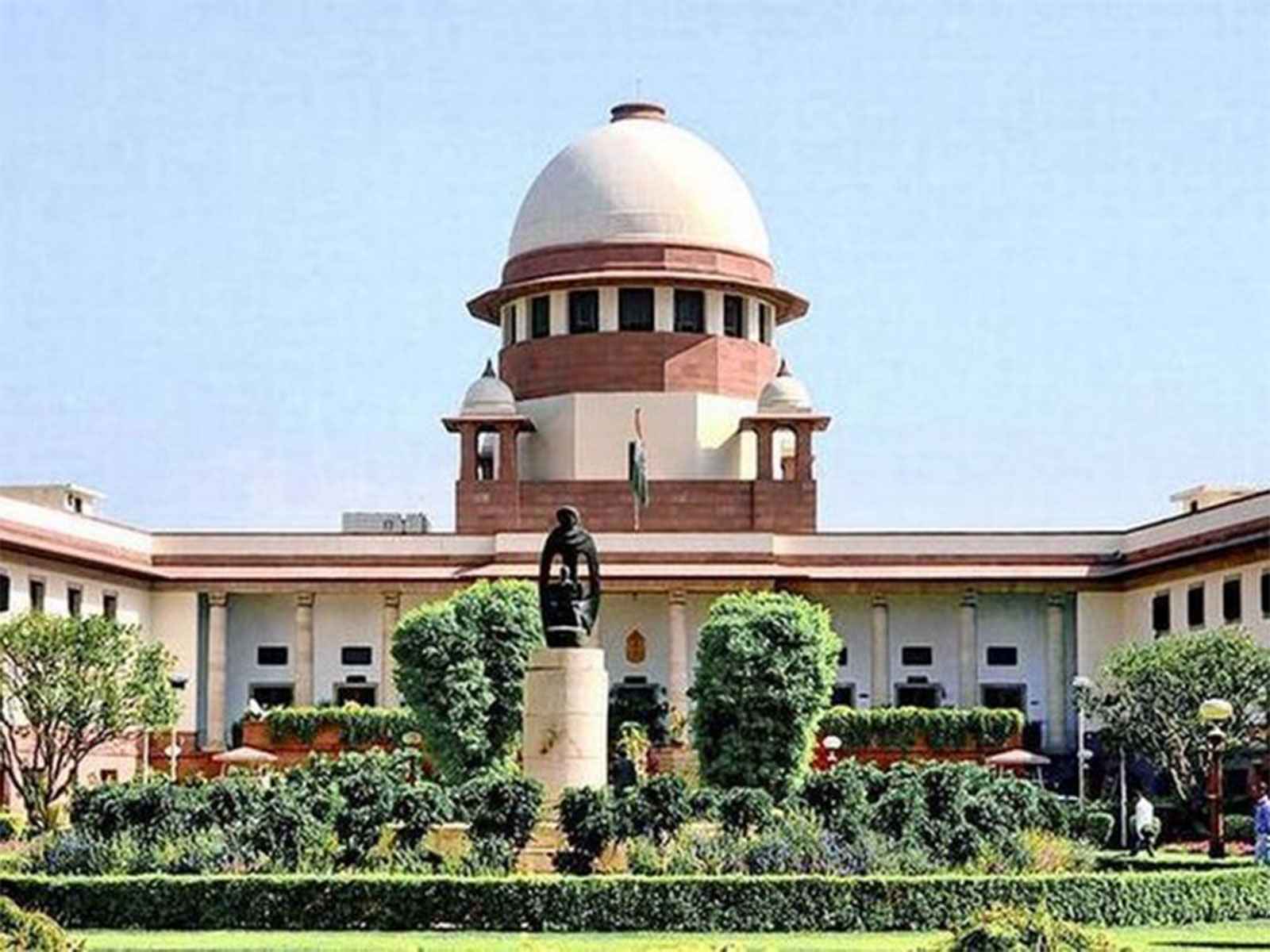
Amid nationwide uproar, the Supreme Court on Thursday stayed the University Grants Commission (Promotion of Equity in Institutions of Higher Education) Regulations, 2026. The Supreme Court clarified that the 2012 rules will still be applicable.
Let us inform that the new UGC rules notified on January 23 were challenged by various petitioners calling them arbitrary, exclusionary, discriminatory and in violation of the Constitution as well as the University Grants Commission Act, 1956.
It is noteworthy that the Supreme Court said that for the time being the UGC Regulations of 2012 will remain in force. The Court said that Regulation 3(C) (which defines caste-based discrimination) is full of ambiguity and can be misused.
The court said, “Its language requires amendment.”
New rules implemented to prevent caste-based discrimination in colleges and universities require institutions to set up special committees and helplines to resolve complaints, especially from students belonging to Scheduled Caste (SC), Scheduled Tribe (ST) and Other Backward Class (OBC) categories.
The new rules notified by the UGC on January 13, which update the 2012 rules on the same subject, have sparked widespread criticism from general category students, who argue that the framework could lead to discrimination against them.
Earlier on Wednesday, students, mainly from the general category, at the North Campus of Delhi University protested against the newly notified equality rules of the University Grants Commission (UGC) and demanded their immediate withdrawal.
The protesting students claimed that these rules promote discrimination instead of equality on campuses. He said that there is no binding provision for representation of general category students.
However, Union Education Minister Dharmendra Pradhan on Tuesday tried to allay concerns raised over the new UGC rules and assured that the law will not be misused and there will be no discrimination in its implementation.
Speaking to reporters, Pradhan said, “I assure everyone that there will be no discrimination and no one can misuse the law.”
On Tuesday, students in Lucknow protested in front of Lucknow University raising slogans against the policies of UGC.
Earlier, Shyam Sundar Tripathi, vice president of BJP Kisan Morcha from Salon constituency of Rae Bareli, had resigned from his post expressing dissatisfaction with the new policies of UGC. Tripathi had announced his resignation in a letter to Prime Minister Narendra Modi.
The letter written in Hindi said, “Due to the black law like Reservation Bill brought against upper caste children, I am resigning from my post. This law is extremely dangerous and divisive for the society. I am completely dissatisfied with this bill. There is deep dissatisfaction towards it. I do not support this reservation bill. Supporting such an immoral bill is completely against my self-respect and ideology.”