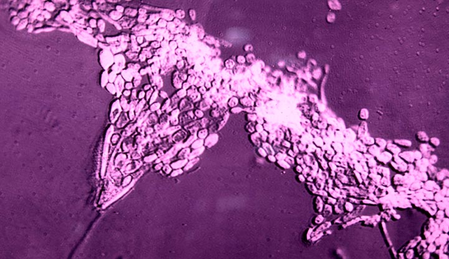
New Delhi, 17 September (IANS). A team of researchers from the Indian Council of Medical Research (ICMR) has developed a unique way to fight a fungal pathogen called ‘Candida Albicense’ (CAL).
Candida albicance is the primary cause of systemic candidiasis. Systemic candidiasis is considered a serious threat worldwide, which can lead to death in severe cases.
Researchers, including researchers, have been a multi -related approach (a method in which knowledge and skills of various subjects are used simultaneously to understand and solve any problem or skills to understand and solve the subject (IIT) researchers from the Indian Institute of Technology (IIT) Madras, which includes researchers from the Indian Institute of Technology (IIT) Madras. Can be controlled.
The team combined computational modeling and experimental validation (experimental verification) on a large scale to identify unknown metabolism weaknesses in CAL.
“Unlike other studies, the head of this research and scientist at Mumbai-based ICMR-NIRCH, Dr. Susan Thomas said,” Unlike other studies, the CAL model was merged with the Human Metabolic Model Rekon 3D of unique integrated host-fungal metabolic models like IRV781.
Thomas explained that this helped researchers to know how CAL metabolism during host infections and was not clear or hidden metabolism weaknesses in lab culture (lab culture). Along with this, it helped to highlight the role of arginine metabolism in CAL pathogen.
Prof. IBSE Faculty of WSAI, IIT Madras. Karthik Raman said, “This unprecedented new research is extremely important to diversify and improve antifungal drugs to bypass immunity. In addition, it is aimed at improving the patient’s life rate, decrease in mortality and reducing treatment costs.”
This conclusion also underlines India’s growing strength and ability to provide solutions in interdisciplinary research, published in prestigious magazine Cell Communication and Signling.
Candida albicans are a species of fungi (yeast) that usually lives as part of normal microbyota in the human body. It is commonly found on the mouth, throat, intestine, vagina and skin without harming healthy individuals.
It causes ‘systemic candidiasis’, a serious, aggressive fungal infection caused by the Candida species (often Candida albicans) that spreads through the mouth, skin or genital area to the bloodstream and internal organs.
The annual event of aggressive candidiasis in India is about 4 lakh 70 thousand. Globally, around 15,65,000 people every year have Candida bloodstream infection or aggressive candidiasis, leading to 9,95,000 deaths (63 · 6 percent).
-IANS
KR/