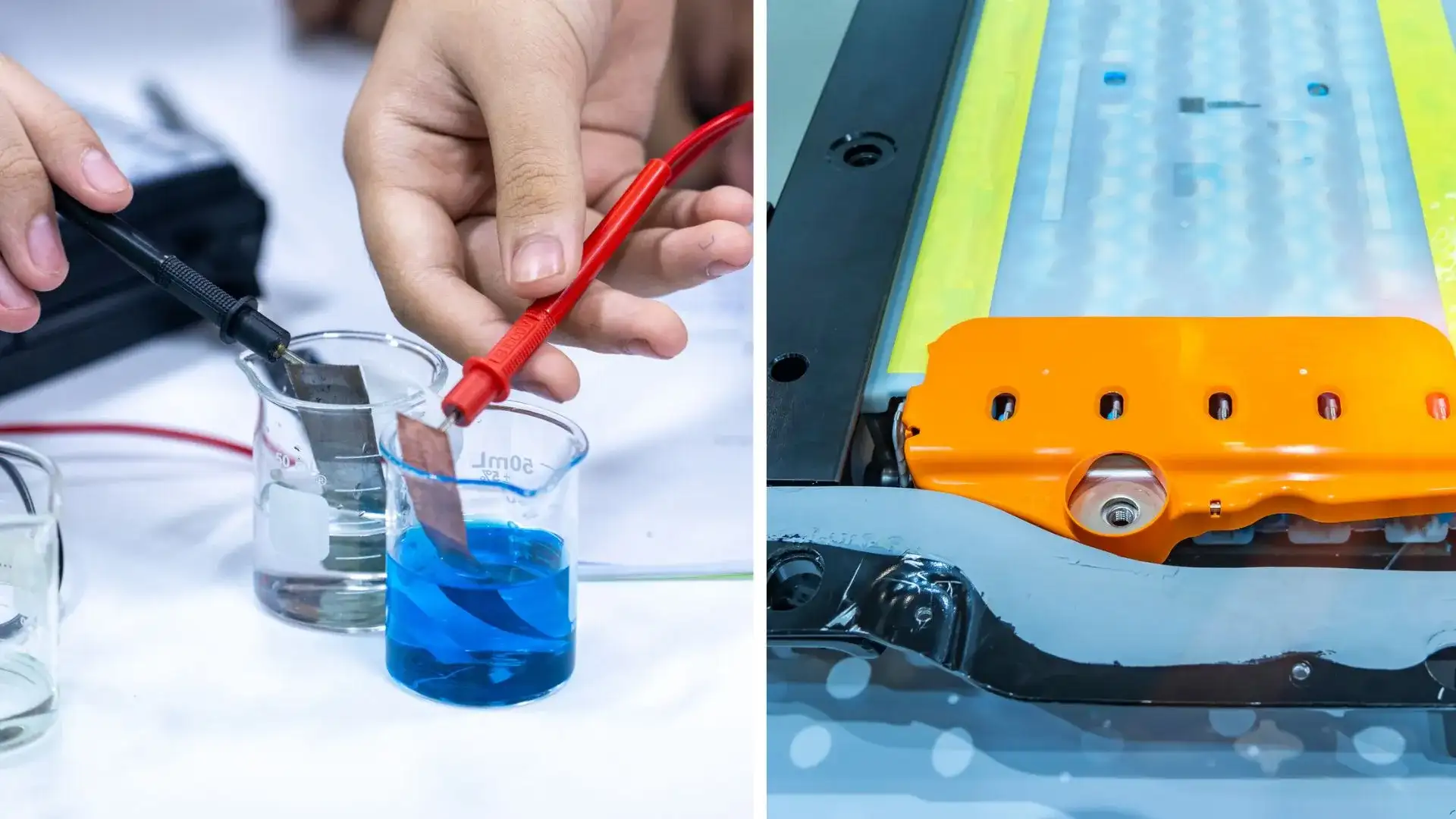
The main concerns with modern batteries are their safety and cost. These batteries often overheat and catch fire; Moreover, expensive and environmentally harmful materials are used in their manufacturing. To solve this problem, scientists at Florida State University have created a new type of zinc-ion battery which works on water-based technology and is considered quite safe.
Great performance even after 900 charge cycles
According to a report by *Interesting Engineering*, the most special thing about this new battery is that even after being charged rapidly about 900 times, its capacity remains almost full. Generally, frequent charging degrades the quality of batteries and reduces their efficiency; But, this new technology seems capable of providing stable performance for a long time.
A better alternative to lithium-ion batteries
Currently, lithium-ion batteries are the most commonly used batteries; But, there is a risk of overheating and fire. For this reason, the search for safer and more environmentally friendly alternatives has intensified around the world.
Solution to dendrite problem
Zinc-ion batteries have long been considered a promising alternative, but they previously had a major problem with “dendrite” formation. During charging, needle-like metal structures would begin to form inside the battery, eventually causing a short circuit and rendering the battery useless. To overcome this challenge, scientists created a unique design in which manganese dioxide electrodes are built directly into the battery. The design uses a water-based hydrogel reinforced with Kevlar fibers—the same strong material used to make bulletproof vests.
A strong and safe design
This battery is designed to act as a protective inner layer. This design not only keeps the electrolyte stable, but also prevents dangerous metal formations from growing, significantly reducing the risk of short circuits. The process of making conventional batteries is quite complex and expensive; In this, a chemical paste is prepared which is applied on the metal surface and then dried. But, in this new technology, the entire process is based on water, making batteries easier and more affordable to make.
A better option for large-scale energy storage
Although this battery is not currently suitable for lightweight devices such as smartphones—as zinc batteries are quite heavy—the technology could prove extremely useful in applications where weight is not a factor; Such as in large-scale energy storage systems or backup power solutions for homes.