With less than two weeks left for the Kerala Assembly elections, political leaders intensified their attacks on each other on Tuesday. They alleged collusion between rival parties and accused each other of ignoring the problems of the state. The Bharatiya Janata Party (BJP) released its manifesto, which offers a mix of welfare initiatives, infrastructure expansion and temple-related measures.
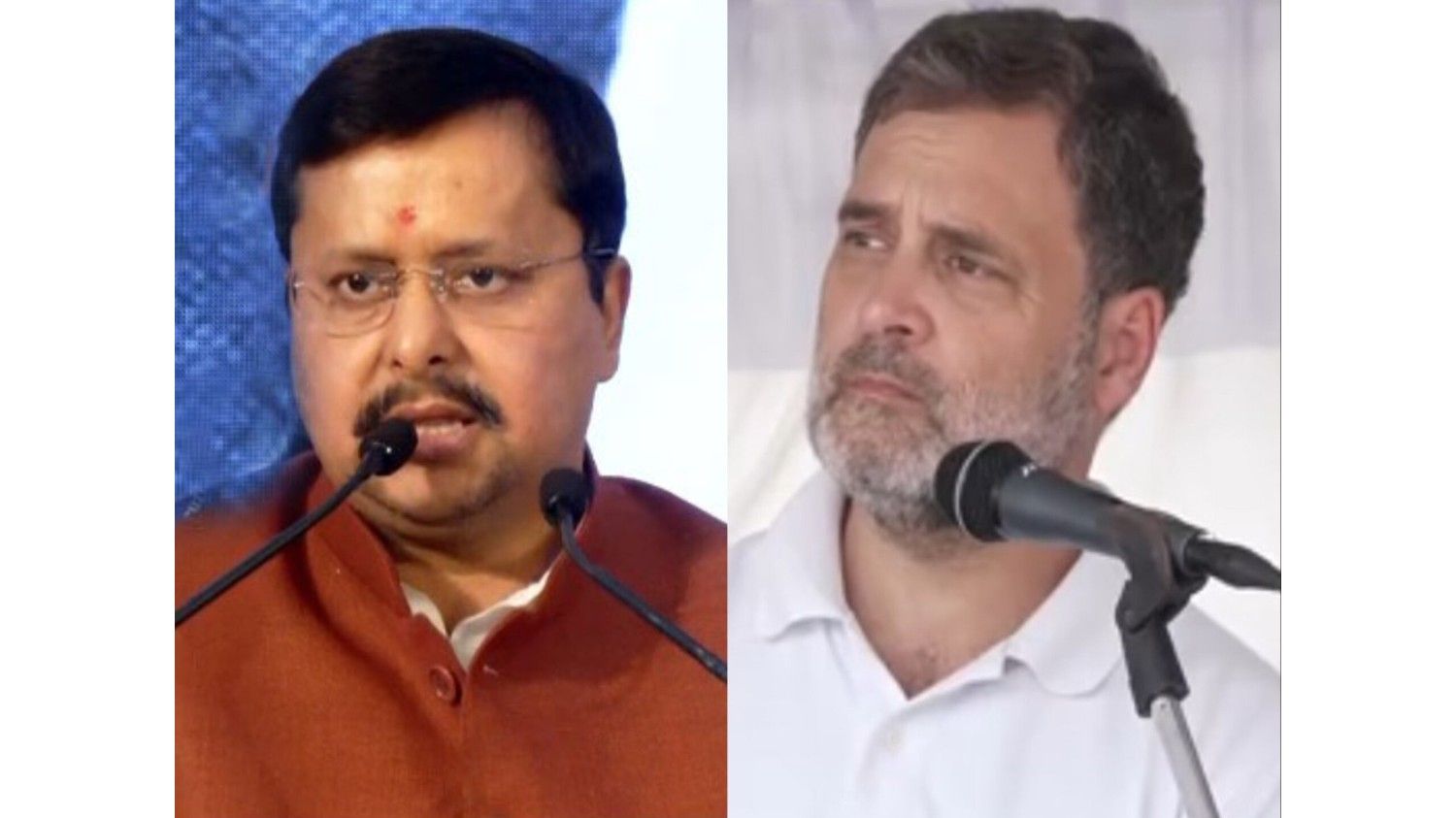
The document, released by the BJP leadership in the state, is presented as a long-term roadmap to transform Kerala’s economy and governance structure. Speaking on the occasion, state BJP president Rajeev Chandrasekhar described the manifesto as “a grassroots new vision” for the state.
“This manifesto is not just about the Devaswom Board. It is a completely new vision for Kerala,” he told ANI. “We have been promising change for the last several months, and this manifesto is that change. The manifesto presents a roadmap for a united Keralam. This investment and employment revolution is based on the five fundamental pillars of improving the quality of life of every Malayali, human security and resilience, and includes a number of projects. The fourth pillar is governance, and the fifth pillar is human security. So we are focusing on five fundamental pillars. This manifesto is being prepared for more than four and a half months.”
Among the key welfare promises, the NDA has promised a monthly pension of Rs 3,000 for needy women, widows and senior citizens above 70 years of age. The manifesto also promises to provide 20,000 liters of free water per month to every household in Kerala.
As part of the welfare initiative, the party said poor families will get two free LPG cylinders every year, one during Onam and one during Christmas. Additionally, the party proposed a “Bhakshya Arogya Suraksha” card for needy women, which will include a monthly recharge of Rs 2,500 to meet expenses on medicines and groceries.
On the development front, the BJP has promised the establishment of an All India Institute of Ayurveda (AIMS) in Kerala and development of a high-speed railway network connecting Thiruvananthapuram with Kannur. The manifesto also emphasizes issues related to temple administration and Sabarimala. Expressing confidence in the party’s electoral prospects, BJP national president Nitin Nabin cited the “Modi guarantee”, saying the party has a long history of fulfilling its promises.
Nabeen told ANI “Our promises always come with Modi’s guarantee. Now, across the country you can see that whenever we have released the manifesto with Modi’s guarantee, we have fulfilled it. In Karnataka and Himachal Pradesh, Congress made promises in the manifesto, but they have not fulfilled them till date, whereas BJP has fulfilled its promises. Kerala’s development has been stalled through match fixing by LDF-UDF for the last 70 years. “The people here are fed up with LDF-UDF and they want change.”
He further said, “I do not pay attention to the number of seats. The way youth and women are coming to vote in Kerala, the trust in BJP is clearly visible on every seat. This time BJP will cement its place as an option in Kerala.” Addressing a public meeting in Kannur, Rahul Gandhi targeted BJP and LDF. He alleged a ‘secret partnership’ between the Communist Party of India (Marxist) and the Bharatiya Janata Party (BJP), saying both have abandoned their ideologies and become “corporate parties”.
Addressing a gathering at the Kannur police grounds, Rahul Gandhi reiterated his allegation that the Congress-led UDF is fighting the combined forces of the LDF and the BJP in the state. The Congress leader further alleged that Prime Minister Narendra Modi “controls” Kerala Chief Minister Pinarayi Vijayan through the threat of central investigative agencies.
He said, “The Chief Minister of Kerala is under the control of Narendra Modi. The Chief Minister knows that the Prime Minister has the keys to send him to jail at this moment. You will hear the Congress attacking Narendra Modi, but you will never hear the Kerala Chief Minister attacking Modi, nor will you see Modi attacking the Kerala Chief Minister.”
Congress leader KC Venugopal also criticized the Center for ignoring the plight of rubber farmers, reiterating the allegations against the BJP-LDF alliance.
Venugopal posted on Χ “Both the State and Center have failed to solve the problems of rubber farmers and get them fair prices. It is our determination to ensure Rs 250 per kg for rubber and we will implement it in the first meeting of the UDF Cabinet. Both these fronts (Centre and State) are in collusion to fill their own coffers, while the people of Kerala are waiting for a pro-people government, which they got in the name of Late Oommen Chandy Ji. Have not seen since the government of.
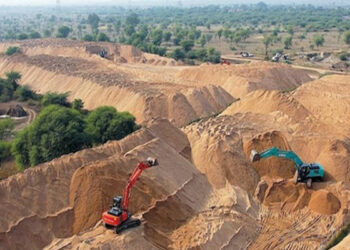
Rubber farmers in Thiruvalla have also expressed deep concern over falling prices, rising input costs and labor shortage, describing the crisis as an “existential crisis” as political parties make promises to each other while livelihoods linked to the state’s “white gold” continue to deteriorate.
This crisis has now become not just an economic but also an existential crisis. Due to huge increase in production cost and unstable market, farmers are getting only Rs 200 to 213 per kg, hence the “white gold” (animal fat) that enriches the middle class of Kerala is losing its luster.
Speaking to ANI near a local plantation, farmers described the dire condition of the agricultural sector. The main reason for this? A serious labor crisis. A farmer said, “We are facing a double whammy. On the one hand, there is a huge shortage of tappers, while on the other hand, the wages are so high that we have nothing left after paying salaries to the workers. The government had promised incentives to bridge this gap, but the money is like a ghost; sometimes it comes, and most of the time it does not come.”
Dissatisfaction with the political class is clearly visible. When asked about Rahul Gandhi’s recent lofty promise to raise prices to Rs 250 per kg (with the aim of eventually taking it to Rs 300), the response was one of tired skepticism.
“We have heard these things before every election. Promises vanish as soon as polling stations are closed. Leaders keep debating whether Rs 250 is enough or not, while the truth is that we need at least Rs 300 per kg to survive,” said a farmer.
Voting for the Kerala Assembly elections will be held in a single phase on April 9 and counting of votes will take place on May 4. Kerala has traditionally had an elective pattern of governance, with power alternating between the Left Democratic Front (LDF) and the United Democratic Front (UDF) every five years since 1982. This trend was broken in 2021 when the LDF led by Chief Minister Pinarayi Vijayan was re-elected for the second consecutive term.
While LDF and UDF are leading in the elections, BJP will try to make its mark after its historic victory in the Thiruvananthapuram Municipal Corporation elections.