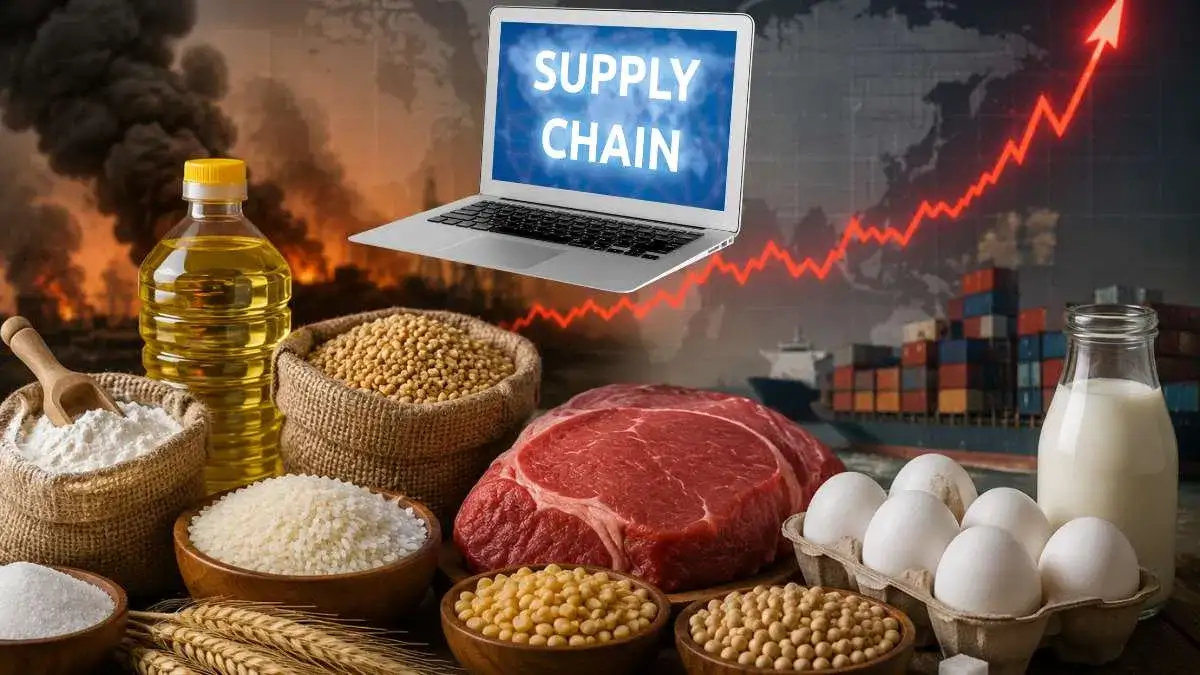
There is a continuous rise in food prices all over the world. According to the Food and Agriculture Organization (FAO) associated with the United Nations (UN), the global food commodity price index has increased by 1.6% in the month of April. This is about 2.5% more than last year and is considered to be the highest level in the last three years. According to the FAO report, the biggest reason for this surge in food prices is the ongoing war between America and Iran. The effect of increasing military tension between the two countries is now clearly visible on the global supply chain and agricultural sector. Experts say that if the situation does not improve soon, the food crisis may deepen in the coming months.
It has now been 10 weeks since the Iran war. During this period, the Hormuz Route, considered the most important sea trade route of the Middle East, remains closed. This route is considered very important for the global supply of oil, diesel and many essential commodities. Due to the closure of the Hormuz Route, the supply of diesel and fertilizers used in agriculture has been badly affected. According to agricultural experts, the shortage of diesel and fertilizers is having a direct impact on the cost of farming. In many countries, farmers have to buy fertilizers and fuel at expensive prices, due to which the cost of production is increasing rapidly. Its effect is visible on the prices of essential commodities like wheat, rice, maize and edible oil.
FAO has warned that if the war and maritime crisis continue for a long time, global food inflation could rise further. Especially poor and developing countries are expected to be most affected. Concern about food security is already increasing in many countries. Economic experts believe that due to instability in the Middle East, there is severe pressure on international trade and supply networks. The rise in oil prices has also increased transportation costs, which could further push up food prices. The United Nations has appealed to all countries to increase cooperation to secure supply chains and maintain the availability of essential food and agricultural products. At the same time, common people may have to face more food inflation in the coming time.