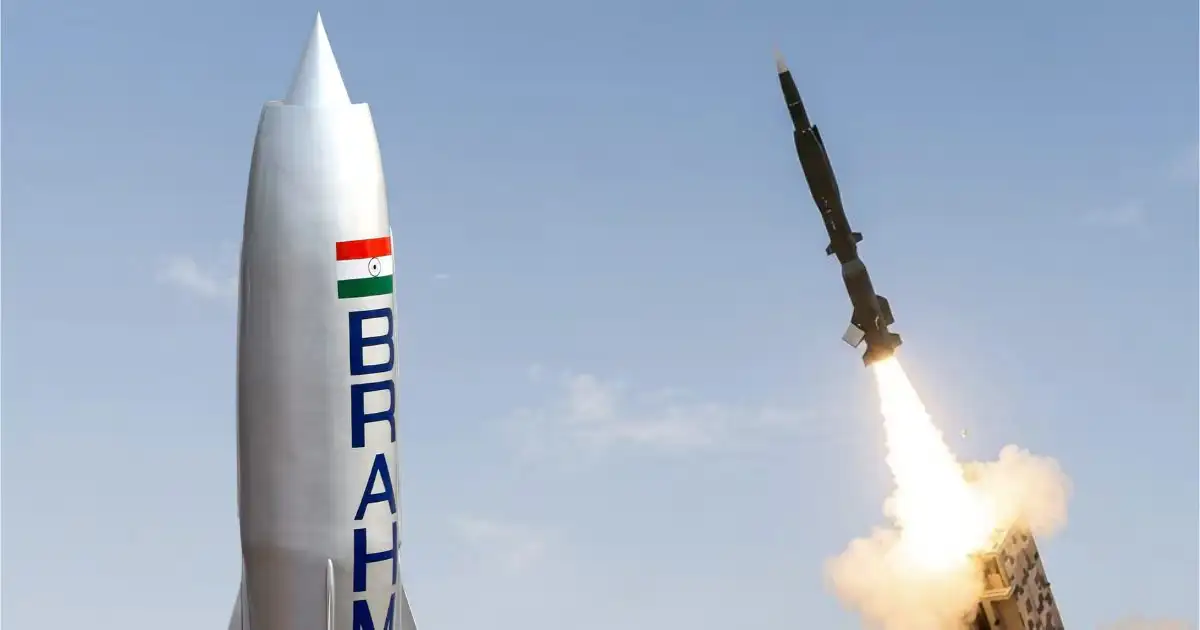
India’s BrahMos missile has long been considered one of the most powerful supersonic cruise missiles in the world. Pakistan’s recently introduced Fateh-3 missile has also made headlines. Although both are touted as high-speed, precision-strike missiles, defense experts believe there are significant differences between the two, both at the technical and operational levels. Recently, Pakistan claimed to have successfully tested Fateh-3 missile. With this in mind, let’s examine the capabilities of India’s BrahMos and Fateh-3.
BrahMos and Fateh-3
The biggest strength of BrahMos is its long operational history and its time-proven combat capabilities. The missile, jointly developed by India and Russia, has been an integral part of the Indian Armed Forces since approximately 2005–2006, and has undergone continuous improvements over the years. In contrast, Pakistan’s Fateh-3 is a relatively new system. Reports suggest that it is largely based on Chinese HD-1 missile technology. Pakistan has been reporting impressive performance figures for this system, but its full operational effectiveness has yet to be proven over time.
What is the speed of these two missiles?
BrahMos is considered one of the fastest operational cruise missiles in the world. It uses a two-stage propulsion system, consisting of a solid-fuel booster and a liquid-fuel ramjet engine. This structure enables the missile to maintain a speed between Mach 2.8 and Mach 3. In contrast, Pakistan claims that its missile can achieve speeds ranging from Mach 3 to Mach 4. However – unlike the BrahMos, which has been extensively tested and operationally deployed over the years – the Fateh-3’s actual battlefield performance and reliability is largely limited to test results and official claims.
Strike Range
Both missiles were originally developed within the strike range restrictions imposed by international missile control agreements, such as the Missile Technology Control Regime (MTCR). Several variants of the BrahMos currently exist, with attack ranges ranging from approximately 290 km to 500 km. Additionally, according to reports, work is also underway on extended-range versions capable of engaging targets at ranges greater than 800 km. In contrast, the Pakistani missile’s strike range is estimated to be between 290 and 450 km. In terms of destructive capability, both missiles are capable of carrying conventional warheads weighing 200 to 400 kg.
better launch capability
In terms of launch capability, BrahMos missile is much better than Fateh-3. BrahMos is a true multi-platform missile system; It can be launched from mobile launchers on land, naval warships, submarines and fighter aircraft like Sukhoi Su-30MKI. In contrast, the Fateh-3 is currently projected primarily as a road-mobile, surface-to-surface missile, launched from transport vehicles. Additionally, BrahMos is recognized internationally for its “fire-and-forget” capability. The missile is designed to attack targets with extreme accuracy while traveling at supersonic speed. Fateh-3 includes modern GPS and navigation systems; However, it is said to lack the operational track record and real-world credibility that is currently associated with BrahMos.
difference in engine technology
After separation of its conventional booster, the BrahMos missile relies on a liquid-fueled ramjet engine. In contrast, the Fateh-3 uses a solid booster followed by a ramjet motor system to achieve supersonic performance.