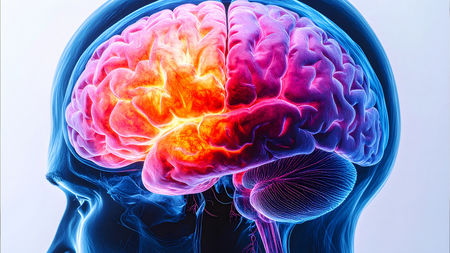
New Delhi, 20 September (IANS). According to the researchers, vascular dementia is a broad problem, but it has not been studied as intensive as Alzheimer’s disease. In this state, abnormal plaque and protein tangles accumulate in nerve tissue, causing damage to the small blood vessels (small blood vessels) of the brain.
The team of the University of New Mexico developed a new model for identifying and classification of various forms of vascular dementia (vascular dementia) to better understand various forms of disease and find effective treatment.
The university professor Ellen Bairer said, “Conditions such as hypertension, atherosclerosis and diabetes have been linked to vascular dementia, but recently found nano and microplastic in the human brain. The discovery revealed that the reasons could not be understood properly.”
He further said, “We are shooting arrows in the dark. Various vascular pathology is not widely defined, so we do not know who we are treating. And we did not even know that nano and microplastic are present in it.”
In this study published in the American Journal of Pathology, Bayer and his team identified 10 different pathological processes that usually contribute to vascular-based brain damage (vasaccular based brain injury) by causing oxygen or nutrient deficiency, blood serum leakage, and inflammation or decrease in waste removal. These cause small strokes that damage neurons.
He gave a list of new experimental techniques to locate them.
Meanwhile, the bearer said that a new area of anxiety is the presence of nano- and microplastic in the brain that can cause health problems.
He said, “Nanoplastics in the brain are playing the role of a new player in the field of brain pathology. With this discovery we need change in the set ideas about Alzheimer’s and various types of dementia.”
He said, “I have come to know that the amount of plastic is much higher in dementia victims than ordinary people. It is also associated with the type of dementia and its levels.”
-IANS
KR/