Kinshasa, June 6 (IANS). There has been a huge increase in Ebola cases in Congo. The number of patients infected with Ebola virus has increased to 452. 82 people infected with this virus have died.
According to the latest report released by the Congolese Health Ministry, the number of confirmed cases of Ebola in the Democratic Republic of Congo (DRC) has reached 452, including 82 deaths.
On June 4, health officials reported 71 new confirmed cases in Ituri and North Kivu provinces, with 21 deaths, according to the report. This is indicative of rapid and persistent community transmission amid the outbreak caused by the Bundibugyo strain of the virus.
A total of 258 patients are in isolation or under hospital care, while eight have recovered, Xinhua news agency reported.
The report says that there is still a major gap in contact tracing (tracing people who have come in contact). Of the 4,766 people whose contacts were being monitored in the three provinces, only 2,755 have been traced, an overall follow-up rate of 57.8 percent.
DRC health officials have spoken about the main challenges facing the situation. According to officials, the situation is aggravated by resistance to taking swabs during post-mortem, insufficient standard capacity to treat Ebola, weak contact tracing, shortage of essential medicines, lack of infection prevention equipment in North Kivu, poor alert reporting and lack of funding of US$21.5 million.
Uganda’s Health Ministry said on Friday that three new cases of Ebola have also been confirmed in Uganda, bringing the total number of cases of infection to 19.
The Africa Centers for Disease Control and Prevention (CDC) and the World Health Organization (WHO) on Friday launched Ebola outbreak preparedness and response planning for the entire continent. US$518 million is being set to be mobilized to help African countries prepare for, rapidly identify and respond to outbreaks between June and November.
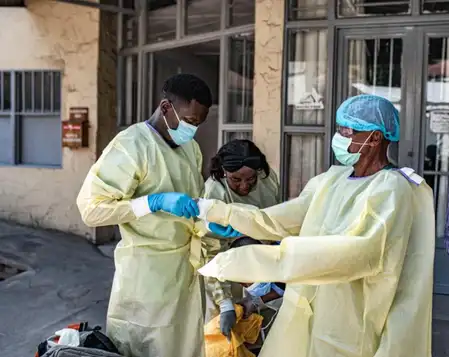
According to the Africa CDC and WHO, a total of 34 health workers have been infected with the Ebola virus so far, of which seven have died and six have recovered.
Africa CDC and WHO also cited significant operational challenges, including a lack of medical response to the Bundibugyo Ebola strain, weak health infrastructure, and pressure on health systems already dealing with multiple health emergencies. Lack of resources, high mobility of people, insecurity and displacement, infection among health workers, and misinformation and mistrust have made the situation even more difficult.
–IANS
sd/pm