New Delhi, June 25 (IANS). Prime Minister Narendra Modi congratulated Armenian Prime Minister Nikol Pashinyan and his party on their victory in the parliamentary elections. Also expressed gratitude to them for their cooperation in the safe evacuation of Indian citizens from Iran. Both the leaders reiterated their commitment to further strengthen India-Armenia relations.
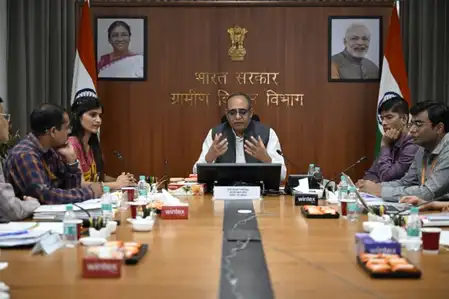
Representatives and nodal officers of 18 ministries and departments of the Central Government participated in this discussion. This discussion is part of the preparations before the implementation of the VB-G Ramji Act from July 1.
According to an official statement, the focus of the meeting was to implement the Act’s vision of a ‘whole-of-government’ approach to rural development through decentralised, Panchayati Raj Institutions-led planning and convergence.
The framework has a ‘bottom-up’ planning framework, in which development priorities identified by gram sabhas are aggregated through Panchayati Raj institutions and linked with sector-specific programs of different ministries and departments.
This approach aims to ensure that government investments are focused on locally identified priorities, leading to more effective and sustainable development outcomes.
The department has released an interim list of 318 approved works to help implement the scheme from July 1. These include natural resource management, irrigation, rural connectivity, community infrastructure, livelihood supporting assets, climate resilience and disaster preparedness.
The participants said that the large scope of sanctioned works provides a lot of opportunities for convergence between different sectors and schemes.
Rohit Kansal emphasized that convergence is the core foundation of the VB-G Ramji Act and is essential to address the interlinked rural development priorities such as water security, livelihoods, infrastructure, climate resilience and local economic development.
He explained that the Act envisages a “single plan: multi funding” approach, whereby different schemes and programs can work towards achieving common development goals while maintaining their respective mandates and funding structures.
The Rural Development Department presented the draft of the Convergence Framework prepared under the Act. At the heart of this framework is the ‘Developed Gram Panchayat Plan’ (VGPP), which serves as the main planning tool for rural development at the Gram Panchayat level.
Developed with community participation and approved by the Gram Sabha, the VGPP aims to link local needs with resources, expertise and investment available under various central and state schemes.
–IANS
ASH/ABM