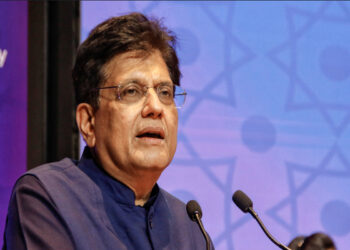
Stressful relations between India and Pakistan have always been a topic of discussion. Recently, Walter C. Ludwig III, Associate Professor of King’s College London and former National Cyber Security Coordinator Lieutenant General Rajesh Pant attended the India Today Conclave. He spoke on the topic ‘Traditional War in Atomic Chhatrahaya: India-Pakistan Puzzle’. Let’s take a look at its main parts.
Three major events: Uri to vermilion
The discussion focused on the 2016 Uri attack, 2019 Balakot air strike and Operation Sindoor to be held in 2025. These three incidents indicate a mixture of traditional war, nuclear threats and hybrid war. Rishabh Pant said that these incidents show how the two countries fight small struggles in the shadow of nuclear weapons.
Chakra of action and reaction: Why is the use of nuclear weapons difficult?
Walter Ludwig said that every action has a reaction. If Pakistan does something, India will answer. But the use of nuclear weapons is very difficult. That is why small wars continue. He discussed Pakistan’s strategy for the use of strategic nuclear weapons. Rishabh Pant mentioned two principles. If nuclear weapons are used, it will be small and limited. However, it is important to control the expansion of war. Walter further stated that the war is horizontal (normal), but the nuclear war is vertical (vertical). Small nuclear weapons pose a major threat.
Hybrid War: Pakistan’s main strategy
Rishabh Pant described the hybrid war in detail. It is a combination of contact and non -contact war – such as geographical attacks, cyber attacks, pager attacks (pager equipment attacks), and operational techniques. He said that hybrid war is very big. Pakistan will not be able to fight traditional war, so it will resort to hybrid war through pseudo powers.
Walter discussed the change of Pakistan. He is ending terrorist organizations. Pakistan is increasing its contact with other countries. However, Pakistan could not do anything after the surgical strike. India’s attack in Operation Sindoor worsened Pakistan’s situation. Pakistan got a shock, but it was not worth showing his face.
Information War: Bet of fake news
The discussion was focused on the information war. Walter said that misinformation is widely spread among the people, which affect the decisionrs. Pakistan had coined the stories of victory in Operation Sindoor. While living in London, Walter heard several false stories about French and Chinese weapons.
Rishabh said that there are many levels of information spread: Ministry, military system and cyberspace. Even in China, Xi Jinping is led by cyberspace. He mentioned the defeat in Noor Khan. Why does America want Bagram? There will be some link. China’s defense system was destroyed, so India should be happy.
Who won Operation Sindoor?
Walter clearly stated that India has achieved its goal. India attacked 11 Pakistani air conditions. Military goals were achieved – airports and defense systems were destroyed. India demonstrated its abilities. Pakistani Army Chief Asim Munir’s difficulties increased. Rishabh said that proxy is important in hybrid war, but Pakistan will not be able to face traditional war.
It is important to maintain balance
This discussion suggests that the war between India and Pakistan in the nuclear era will be small, limited and hybrids. It is important to prevent war from growing and beware of information war. Walter and Rishabh believe that India has proved its strength, but Pakistan’s cunning will continue.