Little Subodh, studying in fourth class, was a student not only of books but also of philosophy of life. The religious school of the night had sown within him those seeds which the elders do not have. One evening destiny took him away from home and he fell into the clutches of bandits. A ransom of ten lakh rupees was demanded, there was chaos in the house, but there was a wonderful peace in the mind of that kidnapped child.
Even behind those dark walls of imprisonment, Subodh’s daily routine did not change. He would wake up early in the morning and recite ‘Omkar Mantra’ and ‘Meri Bhavana’ in a melodious voice. When fear tried to engulf him, he would contemplate the ‘twelve feelings’. He would convince himself that this was the result of his past deeds and it was no one’s fault. Seeing his equanimity and devotion, the atmosphere there started changing.
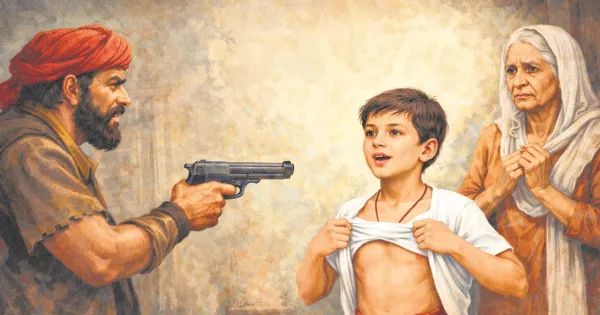
The impact of pure conduct was so deep that the heart of the robber’s old mother ached. Subodh did not touch the non-edible food there for two days. Seeing his loyalty, the old woman herself washed the utensils, filtered water and prepared food for him with complete purity. She was astonished to hear the discussion of virtue, vice and religion from Subodh’s mouth. When his robber son came home, he told him everything and asked him to leave the boy. One day the robber wanted to test Subodh. He roared, pointed the gun and said, “Your father did not send the money, now you get ready to die.” Subodh calmly and boldly removed his shirt and said with a raised chest – “Kill! You can only destroy this mortal body, my soul is immortal.”
He was stunned to hear that this child was considering the fear of death which makes the world tremble as a toy. At that very moment the robber had a change of heart. He touched Subodh’s feet and gave up his vices like gambling, meat and alcohol forever.
Subodh eventually returned home, but he left behind a changed man. The dacoit later became so recluse that he dedicated himself to education and social service. The lesson learned from this story is that values should not only be in words but in conduct. If we have a clear understanding of ‘Bheda-Vigyan’ (difference between soul and body), we can remain steadfast even in the greatest adversity.