
Chandauli district, situated on the sacred land of eastern Uttar Pradesh, is generally seen as a modern administrative unit, but from the point of view of history, archeology and spiritual traditions, this region has been an inseparable part of the ancient Kashi tradition. Kashi was not limited only to present Varanasi, but in ancient times its cultural-religious expansion extended to Chandauli, Mirzapur, Sonbhadra and Ghazipur. After the Sangam city of Prayagraj, Mother Ganga touched the Vindhya Mountains and took Kashi, the part of Baba Vishwanath temple in her lap, from the south side of Varanasi, while the ancient Kashi Chandauli, the part of Tapasthali, from the north direction, east of Ghazipur, has generally made both the entire parts of Kashi proud.
On the geographical map of ancient Kashi Chandauli, the stretch from Rasulpur to Vairath of historical and religious importance still exists. Its importance is duly described in mythological texts. Here the strong impression of the abode of sages, Shiva-Shakti worship and Vedic culture is still present. Chandauli is said to be named after a Barhauliya Rajput named Chandrasah, who built a fort here.
Antiquity of Chandauli
This entire district was under the control of Kashi state. Apart from many stories related to this district, evidence of valuable heritage of ancient times has been found here. Remains of bricks etc. are scattered here and there, and there are many ponds and ponds. A very ancient area is Balua, which is situated on the banks of river Ganga, 22 km south of Sakaldiha tehsil. Here a religious fair of Hindus is held every year on the day of Mauni Amavasya in the month of Magh. It is known as Paschim Vahini Mela.
The village of Sakaldiha tehsil is the birthplace of a great Aghoreshwar saint Keenaram. He was a follower of Vaishnav religion, he had deep faith in Shiva and Shakti. Hetampur village is an ancient place, there is a fort here, which is called ‘Hetampur Fort’. It is said to have been built between the 14th – 15th century by Raja Todarmal, who was the construction supervisor in the reign of Sher Shah Suri. After the Mughal period, Jagirdar Hetam Khan captured it.
Rock paintings, stone tools and caves have been found in Rajdari, Deodari, Chandraprabha area and surrounding hills of Chandauli. These evidences show that primitive humans lived here and this area was the center of life, spiritual practice and nature worship. Chandauli’s Chausathi Devi area, Chandraprabha forest area and surrounding places were important even during the Buddhist period. It had a direct cultural connection with nearby Sarnath. Buddhist monks used to reside in these forests for meditation and spiritual practice.
city of salvation
‘Kashyam Marananmuktih’ This spiritual energy of Kashi was not limited to just one city. Chandauli was the forest-like and ascetic form of that energy. Chandauli region has an ancient tradition of Shivalingas, Devi temples and Shakti Sthals. According to the folk belief here, Lord Shiva roamed in these forests to protect the Kashi region. The Chandraprabha river and forest area located in Chandauli is considered to be the site of the very sacred Chandraprabha Tirtha. The waterfalls and ponds located here were considered best for penance and bathing in ancient times. This place is not only a center of natural beauty but also of spiritual peace.
Chandauli is the sacred place of sages
Land of Sages
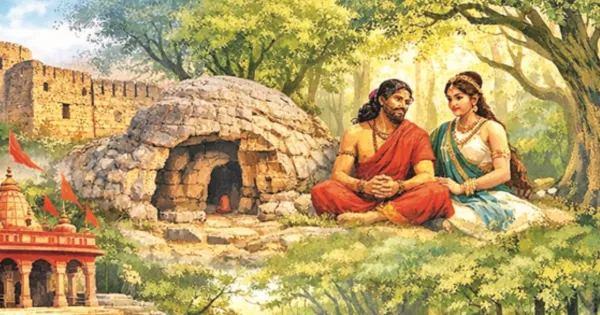
There is evidence of sages and maharishis performing penance on Chandauli land for thousands of years. This area, extending from the banks of river Ganga to the forests of Wanganga and Chakia Naugarh, has been safe and peaceful from all points of view, where sages and sages, sitting in one posture, performed sadhana for hundreds of years. It was in ancient Kashi itself that Maharishi Yajnavalkya was drawn to the peace of Chakia plateau and forest area. Where he stood on one leg and performed penance for hundreds of years. Angered by Lord Shankar, Maharishi Ved Vyas came to Sahupuri (Vyasnagar) of ancient Kashi (Chandauli), where he gave up his anger and started doing meditation there. Maharishi Vishwamitra made Naugarh area his place of work and place of life, its proof is detailed in the form of Karmanasha. The love story of Maharaj Dushyant and Shakuntala is related to this region, where there is evidence of the birth of Maharaj Bharat in Magaur, after his name this country was named India. Scholars also believe that Yamdagni’s son Parshuram had once created unrest in this prosperous area to kill Haihayvanshi Kshatriyas, the proof of which is considered to be Royal Tal.
Folk beliefs and traditions
The traditions of Kashi are still alive in the rural culture of Chandauli. Shiva worship in the month of Shravan, Kartik bath, worship of folk deities, chanting of Vedic mantras in rituals, all this shows that Chandauli is not just a geographical unit, but there is spiritual continuity prevalent in the life of the people here. The image of Kashi is clearly visible in the folk culture of Chandauli. Innumerable folk songs related to Ram, Shiva, Ganga and Kashi are prevalent in the Bhojpuri-Kashi dialect. Kashi is remembered as a holy place in the songs sung on marriages, births and festivals. A glimpse of Kashi tradition can be seen in the events like Shivratri fair, Navratri festival, Kartik Purnima etc.
Current form of Chandauli
Today’s Chandauli district is an example of balance of spiritual heritage and modern development. Chandauli district was separated from Varanasi on May 20, 1997. It is located in the eastern part of Uttar Pradesh, at a distance of 30 kilometers from Varanasi. This district is surrounded by Varanasi, Mirzapur, Sonbhadra, which further strengthens its historical-religious importance. Chandauli is called the ‘rice bowl’ of Uttar Pradesh. This area, blessed with fertile land, canal system, Karmanasha and waters of Chandraprabha, is now moving towards industrial and business activities along with agriculture. There are immense possibilities of tourism here. Here Chandraprabha Wildlife Sanctuary, waterfalls, historical places and many religious places are the centers of tourist attraction. If these are developed properly, Chandauli can get a special place on the spiritual-tourism map. Chandauli and Kashi have an old unbroken relationship. While Kashi (Varanasi) remained the center of knowledge, salvation and consciousness, Chandauli can be called its wild, ascetic and natural expansion area. Chandauli has preserved the soul of Kashi in its forests, rivers, folk life and beliefs. There is a need today that this heritage be recognised, preserved and passed on to future generations. Chandauli is not just a district, but it is the living memory of ancient Kashi. – Gaurishankar Vaishya Humble