
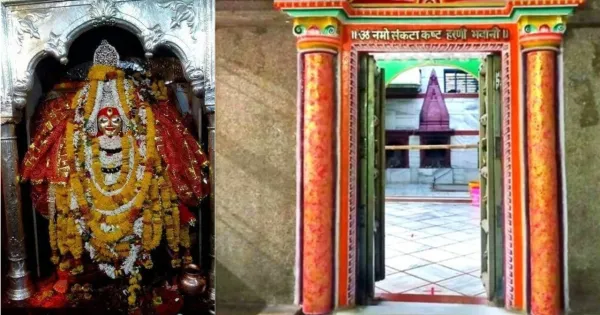
Gupt Navratri is a festival of that ancient tradition of Indian Shakti-worship, in which more importance is given to introverted meditation, self-control and deep devotion to the Goddess than external celebrations. This Navratri, which comes twice a year, is especially considered a period of Shakti-Sadhana, Tantric worship and self-purification. These days, mantra chanting, havan and recitation of Durgasaptshati have special significance in Siddhapeethas across the country. Among these Siddhapeethas, the temple of Maa Sankata in Kashi holds a special place due to its spiritual aura and public belief. Devotees believe that Maa Sankata not only protects from external dangers, but also instills patience and confidence within the man struggling with fear, despair and insecurity.
Kashi: Where Shiva and Shakti are together
In Indian cultural consciousness, Kashi is not just a city but a symbol of philosophy of life. Here religion, philosophy, history and folk life are so integrated into each other that it is difficult to understand them separately. Kashi has been called ‘Avimukt Kshetra’ because it is believed that Lord Shiva never leaves this city. But the identity of Kashi is not limited only to Vishwanath Dham, Ganga and Manikarnika. Places of power like Maa Annapurna, Vishalakshi, Durgakund, Lalita Gauri and Maa Sankata are important bases of its spiritual structure. The Siddhapeeth of Maa Sankata, situated near the banks of Ganga and Manikarnika crematorium, has for centuries been a center of hope for those who reach here struggling with some crisis in life. The devotee coming here does not just expect a miracle, but also wishes to strengthen his broken faith.
power to fight crisis
In the Indian tradition ‘crisis’ does not just mean external calamity. Fear, attachment, disappointment, failure and mental instability are also considered equally big problems. The broader meaning of worshiping Mother Sankata is the practice of overcoming these internal weaknesses. This is why the importance of this Siddhapeeth is not limited only to religious faith, but also lies in its deep psychological and cultural aspects. Here faith does not provide escape, but the courage to struggle.
In Kashi Khand and many Puranas, this city has been called the abode of the gods and the capital of knowledge. Every ghat, pond and temple is associated with some cultural narrative. Whether modern history confirms these stories or not, their importance in the collective memory of Indian society is undeniable. It is these folklores that make pilgrimage sites vibrant cultural institutions.
Living faith in folklore
There are many popular beliefs related to Mother Sankata. According to a famous story, after the Daksh Yagya, Lord Shiva, distraught over the separation from Mother Sati, worshiped this Shakti. By the grace of the Goddess, his grief was calmed and later he again got his better half in the form of Parvati. From a religious point of view, this story symbolizes the compassion and power of the Goddess, while from a cultural point of view it gives the message that reconstruction is possible in life even after separation and destruction.
There is also a belief in folk traditions that during the exile, the Pandavas came to Anandvan, i.e. ancient Kashi, and by worshiping Mother Sankata, gained patience and the strength to stick to their religion in difficult circumstances. Although there is no historical evidence available for these stories, their significance in Indian culture remains as a form of inspiration and cultural memory.
Spiritual splendor of Siddhapeeth in Gupt Navratri
The Siddhapeeth of Maa Sankata becomes especially lively during Gupt Navratri. From the morning Aarti till the night Shakti Puja, the entire complex remains illuminated with chanting of mantras, glow of lamps and devotion. Sadhaks remain engrossed in their sadhana, while ordinary devotees wish for mental peace, family happiness and freedom from troubles.
The tradition of offering Chunari and coconut is especially prevalent in the temple. Chunari symbolizes respect and protection, while coconut symbolizes purity and complete devotion. Devotees also symbolically surrender their fears, ego and insecurities by offering them at the feet of the Goddess. A special crowd gathers here on Friday and a large number of devotees from Uttar Pradesh as well as Bihar, Jharkhand, Madhya Pradesh and other states come for darshan.
Center of public faith and social harmony
The temple of Maa Sankata is not only a place of worship but also a powerful center of social harmony. Here farmers, students, businessmen, officers, housewives and sadhus all stand in the same line and have darshan without any discrimination. Some wish for health, some for mental peace, and some for guidance in difficult decisions of life. Here faith leaves behind social divisions and connects man with his shared human sensibilities. Located near the Manikarnika crematorium, this Siddhapeeth represents the spiritual philosophy of Kashi, where life and death are not opposites, but two dimensions of the same truth. It is a popular belief that while Lord Shiva shows the path of salvation to the soul, Mother Sankata is the presiding power that removes the worldly fears and troubles of the living human being.
Mother Sankata’s message in today’s time
Even in this era of scientific progress and technological facilities, man is struggling with mental stress, loneliness and uncertainty of the future. At such times, places of pilgrimage like Kashi and Siddhapeetha like Maa Sankata become not only centers of religious faith but also sources of self-confidence and cultural consciousness. The real message of Gupt Navratri is that worshiping Shakti does not only mean asking for blessings, but also awakening powers like patience, prudence, compassion and courage within oneself. Worship of Mother Sankata gives us the belief that crisis is not the ultimate truth of life. With the help of faith, spiritual practice and self-confidence, man can find the way to transcend every darkness. Even today, the same message emanates continuously from the streets of Kashi, the continuous flow of Ganga and the compassionate court of Mother Sankata, where faith is alive, hope never ends.