
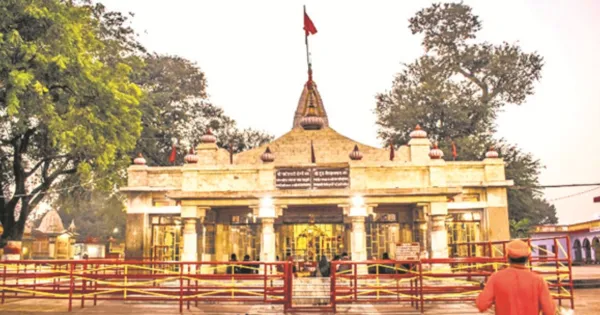
Maa Devi Patan Temple, located in Patan village of Tulsipur tehsil of Balrampur district of Uttar Pradesh, is one of the famous 51 Shaktipeeths of Hindu religion, where the sacred part of the body of Mata Sati had fallen and that is why this place is highly revered as a place of power, center of faith and pilgrimage site. The mythological character of Shakti Peethas is described in Devi Bhagwat Purana, Skanda Purana, Kalika Purana and Shiva Purana. – Namita Vaishya
In the context of Devipatan Shaktipeeth, it is believed that it was here that the left shoulder (shoulder) of Mother Sati had fallen along with her clothes and that is why it got the place of Shaktipeeth. Here the mother is worshiped by the name of “Pateshwari” i.e. the goddess whose relation is established with that Pat cloth. This place is not just a religious place but is considered a symbol of cultural faith, strength, devotion and divine power. It is believed that due to the fallen part of the Goddess, the energy of Shakti has been alive here for centuries. Devotees take bath in the sacred Surya Kund and connect themselves with the divine power through the Snanaadi ritual inside the temple.
Maharathi Karna had taken the initiation of divine weapons here: According to a folk belief, here in the Dwapar era, Suryaputra Karna had received the initiation of divine weapons from Parashuram after taking bath in the Surya Kund. For this reason the glory of this place increases even more. Here the power of Shiva and Durga is felt differently. The story of an ancient tunnel from the sanctum sanctorum down to the underworld is told and even today it is believed that the unbroken flame burning since Tretayuga is a proof of the power of the Goddess. Devipatan Shakti Peeth has historically been the main center of Shakti worship in North India. This Peeth was established by Adiguru Gorakhnath of Nath sect. Stories of penance and sadhana of sages are prevalent around here, among which the names of saints like Guru Gorakhnath and Siddha Ratnath (Nepal) are notable, who attained Siddhi here, which makes the spiritual importance of this place even more clear.
Cultural Bridge of India-Nepal: This Shaktipeeth is also famous as the cultural bridge of two countries India and Nepal. Uttar Pradesh Chief Minister Yogi Adityanath has also described it as a cultural bridge between India and Nepal, which strengthens social and spiritual bonds in the presence of the Goddess. Devotees do not see Devipatan temple merely as a place of worship, rather it is a place where wishes are fulfilled by the grace of the Goddess, such belief is prevalent. Devotees believe that by darshan and worship of Maa Pateshwari, life’s desires, health and happiness and prosperity are achieved.
Main Attractions: The main attractions of Shakti Peeth include Suryakund, Akhand Dhuni (where Dhuna is burnt continuously) and confidential worship. There is a huge influx of devotees especially during Chaitra and Shardiya Navratri. On Navratri, a state fair is organized for about 15 days, in which devotees from different provinces of the country including Nepal come for worship. Idols of nine forms of Durga in the temple premises, ritualistic worship, lighting of lamps, havan-puja and dedication of many gifts including red chunri, vermilion, flowers make this puja tradition even richer. Mother worship is supernatural and unique. The time of puja is fixed from 1 to 4 in the second half of the midnight, its time never changes.
With time, the importance of this temple is not only religious, but it has also become a major center of spiritual tourism in the country. Efforts have started to make the Shaktipeeth Devipatan temple, which is called the second house of the Chief Minister, more grand. The government has given Rs 42 crore 50 lakh so that the religious tourists coming to Ayodhya Dham should be oriented towards Shaktipeeth Devipatan temple. Balrampur administration and Uttar Pradesh government have planned to develop 50 acres of area around the temple, which will further promote religious tourism here. You can go to the temple in this way: The easiest way to reach the temple is by train. If you come by Lucknow and Gorakhpur train, you will have to get down at Tulsipur railway station. Rickshaw etc. facilities are available to reach the temple which is about one and a half kilometer from here. Tulsipur can also be reached by bus. The distance from Lucknow to Gorakhpur is approximately 300 kilometers.