
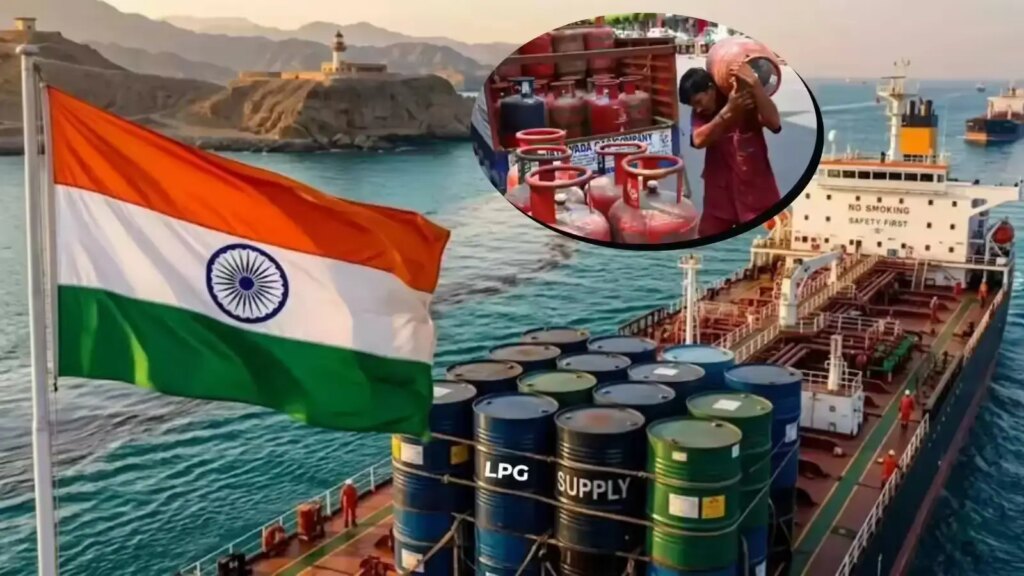
The ongoing conflict in West Asia has completely changed India’s energy procurement landscape. As a direct result of this change, India – which has traditionally been a major importer of liquefied petroleum gas (LPG) from Middle Eastern countries – is now sourcing this petroleum product from the United States. The US has now overtaken the traditional Gulf countries to become India’s largest LPG supplier. Meanwhile, despite geopolitical tensions and sanctions, Russia remains India’s largest oil supplier.
According to data from analytics firm Kpler, the US will account for 55% of India’s total LPG imports in May 2026 – a significant increase from February’s figure of just 14%. The main reason for this change is the initiation of hostile actions against Iran by the US and Israel. On February 28, both countries attacked Iran; The resulting conflict has caused massive devastation across the Gulf region. The war has severely disrupted energy supply chains, as Iran has blocked the Strait of Hormuz, a vital sea route for oil and gas shipments. At present, there is a very fragile ceasefire situation between the two sides, and the ongoing talks to completely end this conflict have not yet reached any decisive stage.
India traditionally depends on the Gulf countries to meet most of its LPG requirements. However, due to this conflict, imports from countries like United Arab Emirates (UAE), Saudi Arabia, Kuwait and Qatar have declined. The combined share of these countries in India’s total LPG imports has declined from 81% in February to only 16% in May. In the month of May, LPG exports from the US to India recorded a 73% increase to approximately 666,000 metric tons. This additional supply flow helped offset the sharp decline in cargo shipments from the Gulf region.
In response to these supply constraints, India was forced to take some drastic measures domestically as well. The government has recently imposed restrictions on consumers who have ‘piped natural gas’ (PNG) connections available; Such consumers can no longer buy LPG cylinders. Additionally, in order to give priority to the needs of domestic households, the Government has also reduced LPG supplies to certain specific industrial sectors. The increase in domestic production has also helped in stabilizing the situation to some extent. According to government data, India’s LPG production – which was about 35,000 metric tons per day before the conflict began – has now increased to 50,000 to 52,000 metric tons per day. Although this has reduced its dependence on imports to some extent, about 60% of the country’s total demand is still met through imports.
**Iran conflict’s impact on oil imports**
The impact of this conflict has also been clearly seen on India’s oil imports. In May, crude oil imports from Russia rose 24% to 1.95 million barrels per day, a major share of India’s total crude oil imports (about 4.9 million barrels per day).
Kpler analysts say Indian refineries are buying oil from Russia at favorable prices. India is securing these supplies at a time when oil shipments from Gulf countries have almost stopped.
Apart from this, India has also increased its purchases from Venezuela and Oman. In May, crude oil imports from Oman saw a 179% increase, indicating that Indian refineries are now turning to suppliers from whom oil can be easily transported to the country through sea routes.