
: Thursday, October 23, 2025 2:45 PM
Patna. Digha assembly seat of Patna district is not just an electoral constituency, but is a living proof of the changing politics and development story of Bihar. Everyone’s eyes are fixed on this seat, because the ‘women voters’ here have the power to decide the fate of any party.
There is a saying that in Digha, whichever side the women turn to, that party wins. BJP’s continuously strengthening hold on this urban-rich seat has made it such an important segment of Patna Sahib Lok Sabha constituency, without analyzing which the politics of Bihar remains incomplete. The election journey of Digha assembly constituency may be short, but it has been very exciting. This seat came into existence after delimitation in 2008 and the first assembly elections were held here in 2010. In this election, JDU’s Poonam Devi opened the account of the seat by winning by a huge margin. Poonam Devi had defeated her opponent by a huge margin. But, there was a twist in the story in 2015. The alliance of JDU and BJP broke and the former allies came face to face. BJP’s Sanjeev Chaurasia won this tough contest.
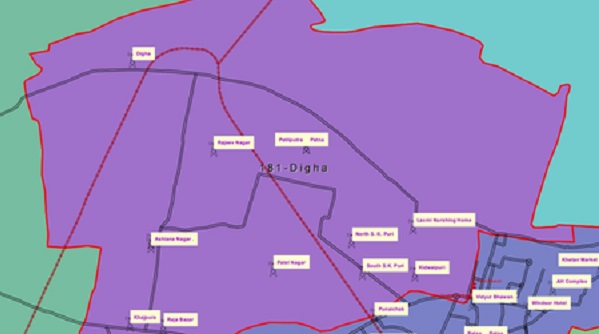
Similarly, JDU and BJP had come together once again in the 2020 assembly elections. This time Sanjeev Chaurasia further strengthened his hold by registering victory for the second consecutive time. She defeated CPI(ML) candidate Shashi Yadav by a margin of 46,234 votes. There were 4,60,868 registered voters in the 2020 assembly elections, which increased to 4,73,108 in the 2024 Lok Sabha elections. The region is entirely urban with only 1.76 percent rural voters. Digha consists of 14 wards and six panchayats of Patna Municipal Corporation.
The most affluent and posh areas of Patna like Patliputra Housing Colony are also part of this area. This area situated on the banks of river Ganga is also very important due to its geographical location. Caste equations also cannot be ignored in electoral mathematics. Although there is no official data on caste-based population, it is believed to have a sizeable Kayastha community, traditionally known to be strong supporters of the BJP.
Apart from this, according to 2020 data, Scheduled Caste voters here were 10.68 percent and Muslim voters were 9.4 percent. The story of Digha remains incomplete without the mention of JP Setu (Jayaprakash Narayan Setu). This bridge is not just a structure of steel and concrete, but is the result of decades of political tussle. Water transport service once ran between Digha and Pahelja Ghat, connecting South and North Bihar. Today its place has been taken by JP Setu.
It is a 4,556 meter long rail-cum-road bridge that connects Digha to Sonpur in Saran district. It is the second longest rail-cum-road bridge in India after the Bogibeel Bridge in Assam. However, the construction of this bridge was not easy. Its path was surrounded by political controversies. Ram Vilas Paswan wanted this bridge to be connected to his constituency Hajipur, while Lalu Prasad Yadav wanted it to be connected to Sonpur in his home district Saran.
The tug of war ended when Chief Minister Nitish Kumar intervened and declared Sonpur as the end point of the bridge. The construction of this bridge led to the establishment of Patliputra Junction railway station, which opened new rail services to North Bihar and Eastern Uttar Pradesh (Gorakhpur), which changed the connectivity of Digha. Patna Sahib, the center of prosperity, vastness and political turmoil, has become an impenetrable fort of BJP under the Lok Sabha seat. Its urban identity and caste equation are two major pillars of BJP’s strong position. –
Read this also – Click to read the news of your state/city before the newspaper.
Web Title-Bihar Assembly Elections: Digha Assembly seat is a stronghold of BJP, understand the equation