
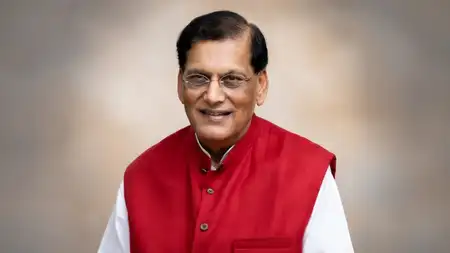
New Delhi, April 1 (). Bindeshwar Pathak, born on 2 April 1943 in a Brahmin family of Rampur Baghel village in Vaishali district of Bihar, forever changed the history of cleanliness and social justice not only in India but also in the entire world. As the originator of public toilets in the country, he is known as the ‘Toilet Man of India’.
After completing his studies, when he joined the ‘Bhangi-Mukti’ cell of ‘Gandhi Centenary Celebration Committee’ of Patna in 1968, he saw very closely the dark truth of India, which the civilized society often ignored.
He saw how lakhs of women and men (mainly Valmiki and Bhangi communities) were forced to carry baskets of human excreta on their heads. These people had to do this work in the morning before sunrise, so that people from the ‘higher’ class of the society would not become impure after seeing them.
Dr. Bindeshwar Pathak believed that as long as there are ‘dry toilets’ in homes (in which feces fall into a basket or bucket), someone will have to clean them by hand. This thinking gave birth to a revolutionary invention in 1968, ‘Two-Pit Pour-Flush Toilet’, which today the whole world knows as ‘Sulabh Toilet’.
This was no ordinary toilet. While flush toilets in western countries require 10-12 liters of water to flush out feces, Sulabh’s ‘water-seal’ technology required only 1.5 to 2 liters of water. There were two pits in it. When the first pit was filled, the feces would start flowing into the second. The sewage from the closed pit was converted into organic fertilizer within a few months. This one small technology opened the way for eradicating forever the inhuman practice of picking up human excreta.
Society does not easily adopt any new and revolutionary idea. The early days of Sulabh International (founded in 1970) were full of terrible struggle. To keep this dream alive, Dr. Bindeshwar Pathak sold the land of his village and even mortgaged his wife’s jewellery. He spent many nights sleeping on the railway platform.
His fortunes changed in 1973. The municipality of Arrah city of Bihar gave him Rs 500 to build two demo toilets. This model was so successful that in 1974, Dr. Pathak opened India’s first ‘pay-and-use’ public toilet in Patna. At that time a nominal fee of 10 paise was kept. People embraced it and 500 people used it on the very first day. Today Sulabh maintains more than 10,000 public toilet complexes across the country, which are used by more than 2 crore people daily.
She started a magical skill development center named ‘Nai Disha’, which changed the lives of manual scavenging women. Those who used to pick up feces started sewing, making papad-pickles and running beauty parlors. One of them is Usha Chaumar, who was awarded ‘Padma Shri’ by the President of India in 2020 under the guidance of Dr. Pathak.
To cut the roots of casteism, Dr. Pathak opened ‘Sulabh Public School’ in Delhi. The rules of this school are very unique. Here 60 percent children belong to sanitation workers and 40 percent belong to general or upper class.
His compassion was not limited to the sanitation workers only. In 2013, Dr. Pathak broke the centuries-old taboo in which widows were kept away from festivals. He played Holi and celebrated Rakshabandhan with thousands of widowed mothers.
Dr. Bindeshwar Pathak left this world on August 15, 2023, but today Sulabh’s model is being adopted in more than 50 countries in Africa and Asia.
—
vku/pm