
: Sunday, October 12, 2025 5:38 PM
GiveExtension culture has become a serious problem in the Indian bureaucracy today. Senior officials retain their positions even after their service period on the basis of their proximity to power and political presence. This not only raises questions on administrative impartiality but also sends the message that political comfort and harmony with power are more important than competence and efficiency. The case of Haryana DGP Shatrujit Kapoor, the tragic suicide of IPS Puran Kumar, and growing factionalism within the bureaucracy confirm the fact that efforts to speak the truth and maintain integrity are slowly being stifled. Today, many senior officers in the country remain on extension even after their stipulated service period. Some people consider it to be the benefit of experience, while others consider it to be the result of political convenience. The reality is that extensions have no longer become a mark of respect but a proof of being close to power. If an officer works as per the wishes of the government then the walls of rules become flexible for him, and if he works with his honesty and impartiality then he is sidelined. The case of Haryana DGP Shatrujit Kapoor is a living example of this trend. In July, the government announced that he would continue in his post till October 31, 2026, i.e. till his retirement.
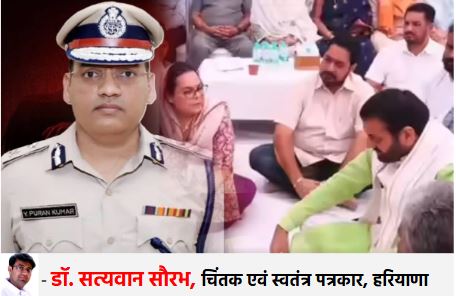
This decision not only spread discontent among the IPS fraternity but also raised the question whether it is justified to fix posts in any state as per political convenience for such a long period. The case of IPS Puran Kumar is a dark chapter of this insensitivity. The officer who raised his voice against the discrimination, harassment and humiliation he faced over the years finally broke down due to the harshness of the system.
His suicide is not just a personal tragedy, but it is a testimony to the fact that the truth-telling officer has become the most insecure creature today. The delay in post-mortem, silence of the officials and silence of the government further makes this collective crime clear. When institutions are not bigger than the individual but become hostage to the individual or power, then it becomes impossible to protect the one who speaks the truth.
One group of IPS officers within the Haryana Police is vocal against the DGP, while the other group stands with the government. This division not only weakens the efficiency of the police force, but also sends the message that truth and courage are now entangled in the web of factionalism and personal selfishness. The alleged statement of the DGP that “I will go on leave, so no permanent DGP should be appointed till my return” is an expression of personal power rather than administrative discipline.
The question is not how efficient an officer they are, but whether a person should be allowed to condition institutional decisions in this way. The soul of every democracy is its independent bureaucracy. But when bureaucracy starts growing under the shadow of power, it becomes royal service and not public service. The belief is getting stronger among officers that telling the truth can put their career in danger, whereas saying yes secures extension and posting.
This trend has started appearing not only in Haryana, but in almost every state, where files are no longer driven by rules, but by relationships and political presence. Cases like Puran Kumar’s require not just sympathy but institutional reform. The extension policy should be transparent and extensions should be granted only in exceptional circumstances. There should be an independent investigation system on complaints of mental harassment and discrimination.
Accountability of senior officers should be ensured, so that the post is not only a symbol of power, but also becomes a scope of responsibility. The political and administrative balance should be redefined, so that officers can discharge their responsibilities without fear. The tragic death of Puran Kumar is a reminder that if standing up for truth and honesty becomes risky, the very purpose of the administrative system is jeopardized.
The officials standing on extensions and the institutions watching silently are a symbol of the fact that the government has gradually taken control of the administrative machinery. The citizens of the country should understand that the strength of bureaucracy does not come from the courage of the individual, but from the transparency and accountability of the institutions. When an officer loses his job, respect and ultimately even his life, it is not just his defeat but the moral defeat of the regime.
Now the question is not who will remain DGP, but whether there will be any officer left who can stand for the truth. If such people do not survive, only political rule will be left in the country and the administrative system will end. This case of Haryana is a mirror for the entire country. This reminds us to what extent the existence of officers who speak the truth is in danger amidst the pressure of power and political interests.
If the administrative system is to be saved, then transparency, accountability and fairness should be its basis. Otherwise only the game of position and power will be left, and public trust will be completely broken.
Read this also – Click to read the news of your state/city before the newspaper.
Web Title-Bureaucracy in the shadow of power: A mirror of Haryana and the reality of the country