
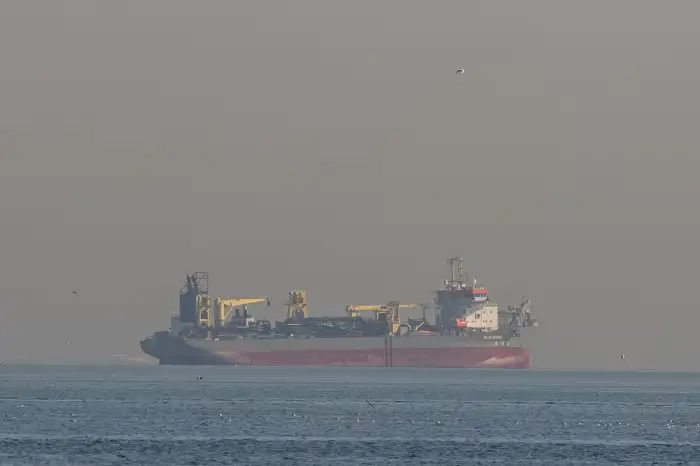
The increasing conflict in the Middle East is directly impacting the Strait of Hormuz. This waterway, once an important trade route, has now become a high-risk zone. In the last few days, many ships have been attacked by drones and missiles. Some tankers were damaged, and one crew member was reported killed. The Strait of Hormuz is a narrow sea passage on Iran’s southern border, connecting the Persian Gulf with the Gulf of Oman and the Arabian Sea. About 20 percent of the world’s oil supply and a large amount of LNG passes through it.
About 15 million barrels of oil is exported every day from the Strait of Hormuz. The largest share in this is from Saudi Arabia (38 percent). Iraq (22 percent), UAE (15 percent), Iran (11 percent), Kuwait (9 percent), and Qatar (5 percent) also depend on this route. In addition, crude oil is also exported from the Strait of Hormuz, which includes China (33%), India (13%), South Korea (12%), Japan (11%), other countries (17%), and other Asian countries (14%).
Huge decline in ship traffic
According to Lloyd’s List, normally about 107 ships pass through this route every day, but on March 1, only 19 ships were recorded. While 22 supertankers had passed the previous day, the number dropped to just four on 1 March. Ships passing through are moving at very slow speeds, increasing transport times and putting pressure on the supply chain. In such circumstances, freight costs and insurance premiums increase, leading to a rise in oil prices.
Impact on India and China
India imports large quantities of crude oil and gas from the Gulf countries, which pass through this waterway. If there is a supply disruption, oil prices in India could rise, the rupee could come under pressure, and inflation could rise. China is also dependent on the Gulf, but its pipeline connections to Russia and Central Asia and its large reserves may provide some relief.
US role
The US Navy can provide convoy security and deploy air defense systems in this area. This can reduce the risk to some extent, but it is not easy to eliminate the danger completely.