
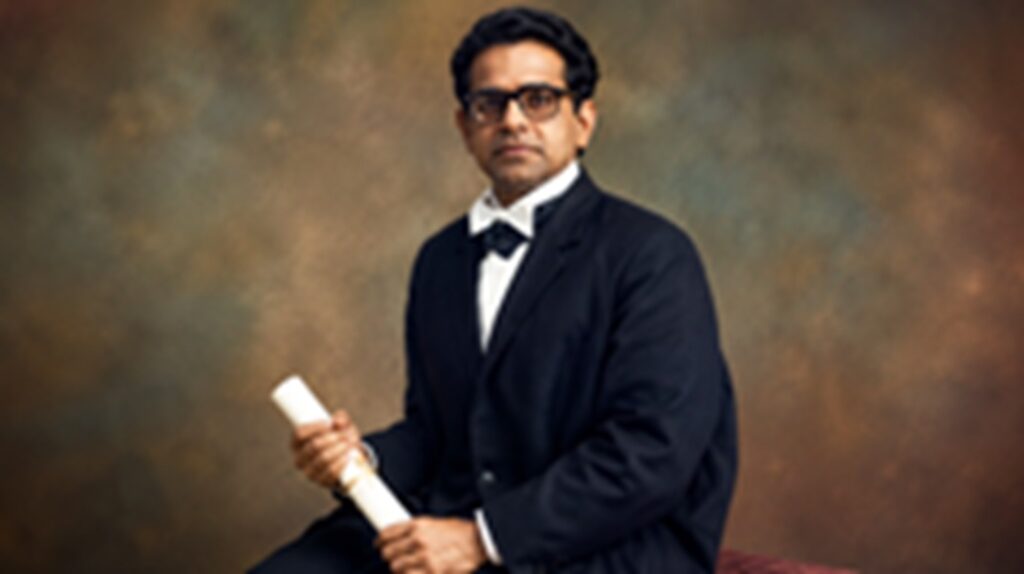
New Delhi. The date of June 19 holds an important place in the history of Indian medical science. This day reminds us of the great scientist who made one of the world’s greatest medical miracles possible in India. However, he did not receive respect during his lifetime. This is the story of Dr. Subhash Mukhopadhyay, the father of India’s first test-tube baby. Today, when In Vitro Fertilization (IVF) technology is bringing happiness in the lives of millions of childless couples, it is important to remember that the scientist who laid the foundation of this revolution in India had to wait more than two decades after his death to get recognition in his own country. On July 25, 1978, the world’s first test-tube baby, Louise Brown, was born in Britain through the efforts of scientists Dr. Robert Edwards and Dr. Patrick Steptoe. The whole world was thrilled with this achievement. But, very few people know that only 67 days later, Dr. Subhash Mukhopadhyay and his team in Kolkata announced the birth of India’s first and the world’s second test-tube baby ‘Durga’ through IVF technology. This achievement was extraordinary in itself.
Born on 16 January 1931 in Hazaribagh, Jharkhand, Dr. Subhash Mukhopadhyay was a brilliant student since childhood. His father Dr. Satyendra Nath Mukherjee was a renowned radiologist. After his primary education, he pursued graduation in Physiology from Calcutta University and obtained MBBS degree from Calcutta Medical College in 1955. She also received scholarship and college medal for her excellent performance in Obstetrics and Gynecology. She then earned two PhDs each in reproductive physiology and reproductive endocrinology.
Dr. Mukhopadhyay was not limited to the use of IVF only. His scientific thinking was far ahead of the technologies available at that time. He used gonadotropin-based techniques to stimulate the ovaries, which later became part of standard treatment worldwide. Most notable was his experiment with embryo cryopreservation, i.e. freezing embryos safely for later use. This achievement was recorded almost five years before other scientists in the world achieved such success. Many of the techniques considered common in the IVF industry today were pioneered by Dr. Mukhopadhyay in the 1970s.
Despite such great success, Dr. Mukhopadhyay did not get respect. The Government of West Bengal constituted a committee to investigate his research. The irony was that IVF and experts were not included in the committee. Dr. Mukhopadhyay submitted a detailed report of his research and findings, but the committee declared his claims unbelievable, absurd and fraudulent. He was not allowed to present his research in international conferences. Instead of being taken seriously, his scientific works were ridiculed. A section of the media and scientific community also viewed him with suspicion.
The scientific rejection did not stop there. In 1980, he was transferred away from home to RG Kar Medical College. The following year he was sent to the Regional Institute of Ophthalmology, where it became almost impossible for him to continue his research. Constant humiliation, mental stress and professional isolation broke him from within. His health began to deteriorate and he even suffered a heart attack. Ultimately he ended his life on 18 June 1981. In his final note he wrote, “I can’t wait to die of a heart attack every day.”
Even after the death of Dr. Mukhopadhyay, his contribution did not get the recognition it deserved for years. In 1997, Dr. TC Anand Kumar, former director of the Reproductive Research Institute, Mumbai, studied her papers, documents and handwritten notes. After thorough investigation, he clarified that Dr. Mukhopadhyay’s research was completely scientific and ‘Durga’ was actually India’s first IVF baby. As a result of his efforts, in 2002 the Indian Council of Medical Research (ICMR) officially recognized Dr. Mukhopadhyay’s contributions.
Several memorial lectures, research centers and awards were established posthumously in the name of Dr. Mukhopadhyay. “Dr. Subhash Mukherjee Memorial Oration” started in 1982. In 2007 he was included in the prestigious Dictionary of Medical Biography. In 2012, ICMR announced an award in his name. In 2020 ICMR-National Institute for Reproductive Health Research published a special book on her life and achievements.
—
Read this also – Click to read the news of your state/city before the newspaper.