
: Monday, March 16, 2026 10:46 PM
New Delhi. India’s export sector remains strong despite growing global uncertainty, supply chain disruptions and rising geopolitical tensions. This information was given by FIEO i.e. Federation of Indian Export Organizations (FIEO) on Monday.
Citing government data, the industry organization said that India’s total exports have increased by about 11 percent on an annual basis to reach $ 76.13 billion. However, in February 2026, there was a slight decline in merchandise exports and it declined by 0.81 percent to $ 36.61 billion.
During this period, merchandise imports increased by 24.11 percent, which increased to $63.71 billion. Due to this, the trade deficit in February stood at $27.1 billion, which is slightly less than in January 2026.
India’s merchandise exports between April and February of the financial year 2025-26 stood at $ 402.93 billion, showing a growth of 1.84 percent. During the same period, imports increased by 8.53 percent to $713.53 billion.
Total exports including goods and services during this period are estimated to be around $790.86 billion, which is 5.8 percent more than last year’s $747.58 billion.
FIEO President S. C. Ralhan said that the export sector continues to show strength and this is mainly due to expansion into new markets and good performance of many key sectors.
He said that sectors like engineering products, petroleum products, electronic goods, pharmaceuticals, gems and jewellery, chemicals, readymade garments, cotton yarn and fabric, rice and marine products have contributed well to exports.
India’s major export markets include the US, United Arab Emirates (UAE), China, Netherlands, UK, Germany, Saudi Arabia, Bangladesh, Singapore and Hong Kong.
Ralhan said that keeping an eye on geopolitical developments, maintaining smooth logistics system and providing timely policy support will be necessary to maintain the pace of exports.
He also said that expanding into new markets, strengthening regional trade partnerships and improving logistics systems will help India deal with global challenges and increase exports.
Meanwhile, the growing conflict in the Middle East involving the US, Israel and Iran is creating new uncertainties for global trade.
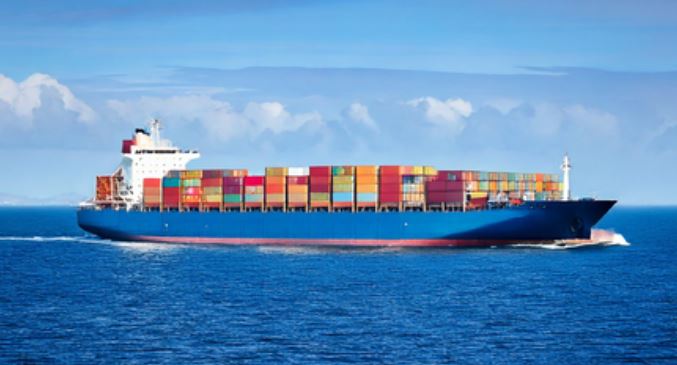
Blockages in key sea routes such as the Strait of Hormuz and the Red Sea are forcing ships to take longer routes, increasing freight costs, insurance premiums and transit times. This is impacting exporters in the form of additional pressure.
—
Read this also – Click to read the news of your state/city before the newspaper.