
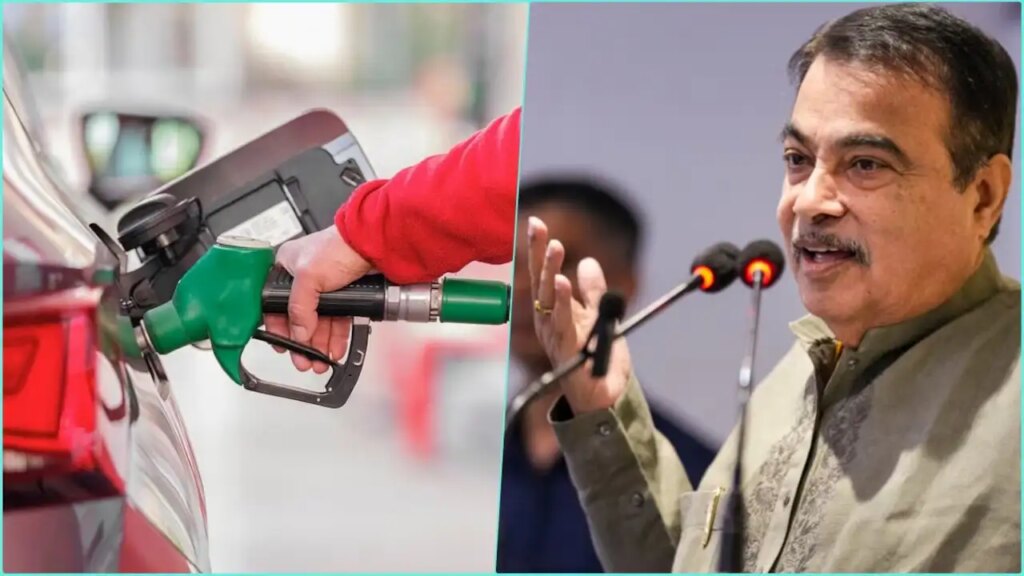
To deal with the rising prices of petrol and diesel in India and reduce its dependence on imports, the government is now emphasizing on alternative fuels like ethanol. Union Minister Nitin Gadkari recently said that, in the near future, India should aim for 100% ethanol blending. He noted that current global tensions—particularly in West Asia—could disrupt oil supplies. In view of this, it is extremely important for India to achieve self-reliance in the energy sector.
Currently, India imports about 87% of its oil needs; This dependence imposes a huge economic burden on the country. Every year, around ₹22 lakh crore is spent on the import of petrol and diesel. If the use of fuels like ethanol increases, this expense can reduce, and pollution levels will also reduce.
Preparation to move ahead with E20 petrol
The government has already introduced E20 petrol—a fuel blend that contains 20% ethanol. Launched in 2023, this fuel can now run many vehicles with minor modifications; Apart from this, it does not cause any significant harm to the engine. Giving an example, Nitin Gadkari pointed out that countries like Brazil are already using 100% ethanol. India can also move in this direction. To achieve this, it is important to promote vehicles with ‘flex-fuel’ engines, which can run on a variety of fuels.
Green Hydrogen: Fuel of the Future
Gadkari described green hydrogen as the fuel of the future, although he admitted that it is expensive at present. He said that if its price could be brought down to around $1 per kilogram, India could adopt it on a large scale. He also suggested that the focus should be on making hydrogen from waste materials. This initiative will not only generate energy, but will also increase employment opportunities and benefit the environment. In short, this will be an important step towards strengthening a ‘circular economy’.
People’s concerns about E20
In recent times, questions and concerns have emerged in the minds of many people regarding E20 petrol. Some people believe that it can have a bad effect on the engines of vehicles. In response, Gadkari said that the petroleum sector is trying to create an atmosphere of protest against this change. He clarified that although people cannot be stopped from buying petrol or diesel vehicles, it is important to gradually switch to alternative fuels. He also urged auto companies to focus not only on reducing costs but also on improving quality.