
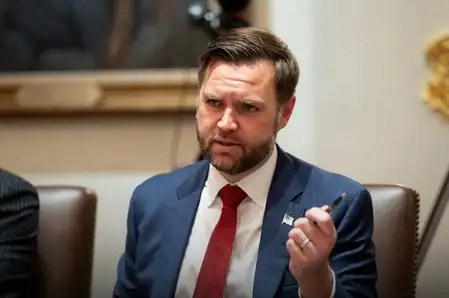
Washington, June 22 (). US Vice President JD Vance has emerged as the main face of President Donald Trump’s sensitive and extremely important diplomacy with Iran. He has taken command of this high level dialogue going on between the two countries, which can give a new shape to the equations of the Middle East. Along with this, Vance is also facing big political risks related to this peace agreement, which is being strongly criticized by the politicians of both the Republican and Democrat parties of America.
The Trump administration is seeing the talks taking place in Switzerland regarding Iran’s nuclear program as a historic opportunity to give a new turn to bilateral relations with Tehran.
“President Trump has asked us to open a new path to transform our relationship with the people of Iran and to lend a helping hand,” Vance previously said. He said the United States is willing to “completely transform relations” with Iran if its leadership abandons regional instability and its pursuit of nuclear weapons.
The role of the Vice President has increased significantly since Trump’s announcement of the memorandum of understanding with Iran last week. Whereas most of the top leadership of the government, including Foreign Secretary Marco Rubio, have remained out of sight. Vance has become the government’s chief messenger and negotiator. Their importance was highlighted by Trump himself.
Before the conversation, President Trump had jokingly said, “If it works, I’ll take the credit, if it doesn’t work, I’ll blame JD. JD, you’ve got to be careful.”
Democratic Senator Cory Booker described the deal as “a virtual surrender” and said, “Iran will get all the benefits, literally trillions and trillions of dollars.” He called the deal “a catastrophic failure.”
Criticism also came from Republicans. CBS featured remarks from Senators Ted Cruz, John Cornyn, Tom Cotton and Bill Cassidy, in which they expressed concerns that Iran could use new economic resources to rebuild its military capabilities and support regional proxies.
Despite the criticism, government officials say the talks are a major diplomatic success.
US Ambassador to the UN Mike Waltz said the talks were “a step that no other government has ever taken” because they involve direct contact with senior Iranian officials.
Waltz said, “We have to give this process a chance. We have to give peace a chance.”
Former Defense Secretary Mark Esper expressed concern over points of the agreement, saying the government should be given time to continue negotiations.
“I think like the vice president said, ‘Let’s give it a chance and see if it works,'” Esper said.
Vance faces a big challenge politically. Vance, who is one of Trump’s key allies and is counted among the influential leaders of the Republican Party, now has the responsibility of presenting and defending the agreement in front of the public, which is considered controversial by staunch supporters of foreign policy as well as many of Trump’s supporters.
Therefore, the consequences of the 60-day talks could extend beyond Iran. Success in this will strengthen Vance’s identity as a major personality in national security and foreign policy. In case of failure, he will have to face criticism from both supporters and opponents of the government’s style. This will make this conversation one of the most important tasks of his political career.
—
KK/AS