
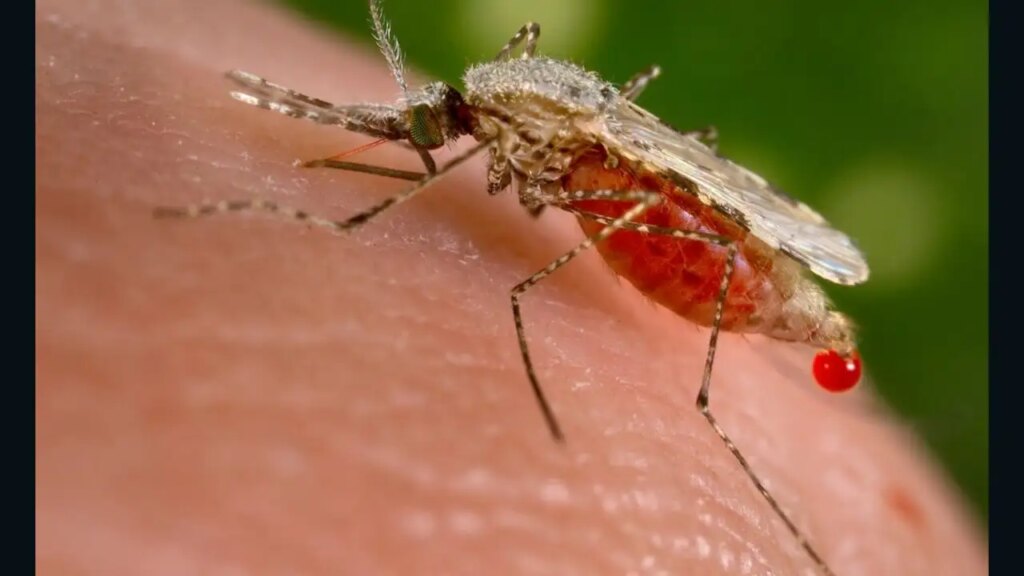
A very shocking and historical revelation has come to light. A number of classified Pentagon documents have been released, confirming that during the Cold War, the US conducted dangerous experiments using mosquitoes carrying infectious diseases so that they could be used as biological weapons. This detailed 69-page report – which was originally released in 1977 and later uploaded to the website of the ‘Defense Technical Information Center’ (the Pentagon’s official library) – has now become the subject of debate around the world.
The report confirms that the US military was running a secret program called ‘Project Bellwether’, which tested the ability of mosquitoes to bite humans in extreme heat and desert areas. The main objective of these tests, conducted between September and October 1959, was to find out whether these insects could be used as lethal weapons against enemy soldiers or civilians. For this secret and sensitive mission, military researchers had specifically chosen the *Aedes aegypti* mosquito species. This is the same species that preys on humans and spreads deadly diseases like Zika virus, dengue, yellow fever and chikungunya.
The published report clearly states that the history of accidental or deliberate spread of diseases originating in laboratories shows that the deliberate use of infected insects against enemy targets can be strategically devastating and extremely effective. American military generals believed that compared to missiles or conventional bombs, this biological method was a very covert and stealthy means of completely neutralizing the enemy. Operation Big Buzz and Drop Kick: Testing air strikes on innocent population
This Pentagon report also reveals that in the mid-1950s the US was also running several other major projects related to mosquitoes, including ‘Operation Big Buzz’ and ‘Operation Drop Kick’. In 1955, under ‘Operation Big Buzz’, the US military dropped approximately 300,000 yellow fever-carrying mosquitoes from an aircraft on ‘Carver Village’, a predominantly black residential area in Savannah, Georgia.
The sole purpose of this extremely inhumane experiment was to find out whether these mosquitoes could survive after being dropped from the sky and then find and bite their targets. Yellow fever is a dangerous disease characterized by high fever, headache, vomiting and bleeding; Without treatment, it can be fatal for up to 50% of those infected. Dengue is also a very debilitating disease; If not treated on time, the patient may die due to internal bleeding and shock.
During the same Cold War era, the US Army also conducted ‘Operation Drop Kick’. Its objective was to find out whether mosquitoes could be fully developed as a delivery system for biological weapons. Under this program, millions of mosquitoes were artificially bred. Researchers released them into the open field to closely study their flying range, survival time in harsh conditions, and their hunting and biting habits.
Although mosquitoes were not directly infected during these field tests – mostly to avoid diplomatic consequences – the entire setup was designed so that they could be rapidly loaded with the deadly virus and released onto the battlefield if needed. Scientists of the US Chemical Corps found that these insects not only survived after air drop, but were also very adept at finding humans. ‘Live trial’ on US soldiers in Utah desert
The story of this secret project did not end here. A 1960 Pentagon report stated that based on the results of ‘Operation Big Buzz’, scientists conducted 52 live tests at Dugway Proving Ground in Utah – a dry, open desert area. These tests included those soldiers of the US Army who voluntarily agreed to participate. The Army Chemical Corps team specifically wanted to find out whether *Aedes aegypti* mosquitoes – which are generally adapted to tropical climates – could survive and prey on humans in Utah’s scorching, dry climate.
During these scientific tests, soldiers were placed in small groups in the desert interior and hungry mosquitoes were released on them. The results showed that when a group of ten soldiers were placed in the field and released with just 100 mosquitoes, each soldier was bitten by mosquitoes an average of 40 times. Photos in Pentagon files show soldiers examining mosquito traps and monitoring equipment. Scientists concluded that these ‘killer mosquitoes’ can withstand difficult weather conditions like strong winds, high temperatures and intense sunlight. They remain active even in temperatures as low as 60 degrees Fahrenheit, making them an ideal biological weapon for attack anywhere in the world.