
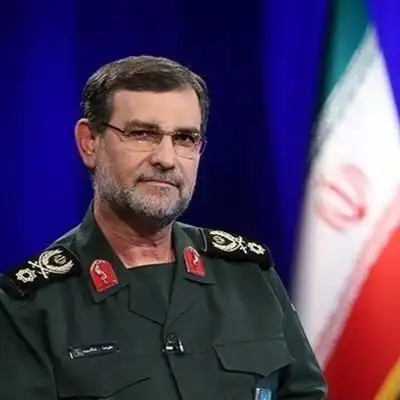
Tehran, March 30 (). Iran has officially confirmed the death of Islamic Revolutionary Guard Corps (IRGC) navy commander Alireza Tangsiri. According to Iranian news agency IRNA, Tangsiri was seriously injured and this injury was the cause of his death.
On March 26 itself, Israeli Defense Minister Israel Katz and then Prime Minister Benjamin Netanyahu had claimed that the Israeli Army had killed several officers including Tangsiri in an operation. Now after Iran’s confirmation, it has become clear that Tangsiri died after being injured in the attack.
Israeli Prime Minister Benjamin Netanyahu released a video message informing about the demise of Navy Chief Tangsiri. “On Wednesday night (25 March), the commander of the IRGC Navy, Alireza Tangsiri, who was guarding the Strait of Hormuz, was killed,” he said.
Before Netanyahu, the country’s Defense Minister Israel Katz had given information about Tangsiri’s death. “Wednesday night, in a precise and dangerous operation, the IDF eliminated the Revolutionary Guards’ navy commander, Tangsiri, and senior officials of the Naval Command,” he also said in the video message.
Tangsiri’s death was first reported by Israeli media quoting an Israeli military official, who claimed that Navy Commander Alireza Tangsiri was killed in attacks on the Iranian city of Bandar Abbas.
Alireza Tangsiri was the head of the IRGC Navy and was considered an important face of Iran’s maritime military strategy.
He played a major role in monitoring ships and military action in Hormuz. Born in Bushehr province in southern Iran, Tangsiri joined the IRGC Navy after playing a key role in the Iran-Iraq War and the so-called Tanker War (the US’s first conflict with Iran in the 1980s).
Tangsiri commanded the IRGC Navy’s 1st Naval District in Bandar Abbas and served as deputy commander from 2010 to 2018, after which he assumed the position of Chief of the Force.
With the confirmation of Tangsiri’s death, his name has joined the growing list of senior Iranian officials who have been killed since the conflict began on February 28. The list includes several prominent military officials, including Supreme Leader Ayatollah Khamenei, former President Mahmoud Ahmadinejad, security chief Ali Larijani, Defense Minister Aziz Nasirzadeh, and Revolutionary Guards commander Mohammad Pakpour.
—
kr/