
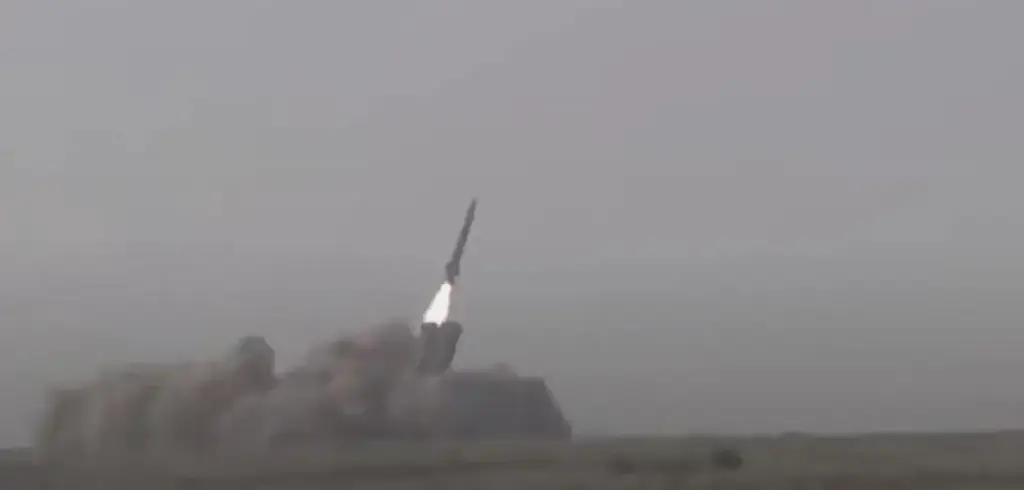
Pakistan has successfully tested Fateh-II missile system. Pakistan Army announced this on Tuesday (April 28, 2026). In a statement issued by the army, it was said that this missile was launched by the Army’s Rocket Force. The missile is equipped with modern machinery and new, advanced guidance systems, which have significantly enhanced its operational capability and accuracy.
Pakistan Army also said that the main objective of this launch was to conduct a training exercise for the soldiers to ensure that they can operate the system effectively. Additionally, various technical parameters were also evaluated to confirm that all the systems inside the missile are functioning properly. Under this process, the performance of the missile’s integrated systems was tested to further improve its accuracy and safety.
Key Features of Fatah-II Missile System
Pakistan’s Fateh-II is an indigenously developed missile system. It is a guided multi-launch rocket system, which means it can be used to fire multiple rockets simultaneously and has the ability to change its trajectory while moving towards its target. Its range is said to be around 400 kilometers. This missile is particularly known for its precision strike capabilities; It is said to be capable of hitting its targets with extreme accuracy—within a radius of approximately 10 meters. The system uses modern technology, including advanced flight control and guidance systems, which enable it to change its course during flight as needed.
Fateh-II will increase the strength of Pakistan Army
Another special feature of the Fatah-II is its low altitude, flat flight path. As a result, it becomes extremely difficult for radar systems to detect it and for air defense systems to intercept it. It can be launched from a truck-mounted launcher, making it easy to move from one place to another and rapidly deployed. Fatah-II is a new and more advanced version of the Fatah-I system. The Pakistan Army has inducted it into its fleet to enhance its capabilities and target enemy targets—such as airports and radar systems.