
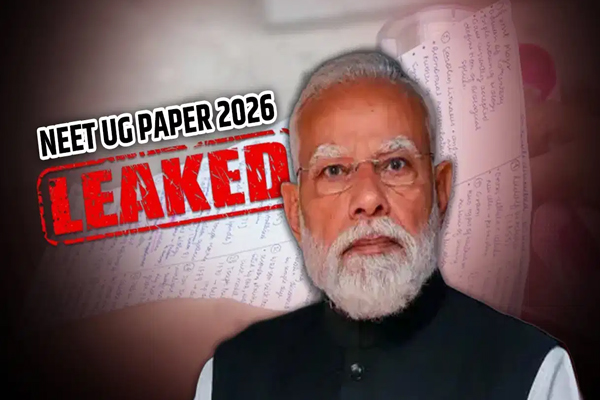
New Delhi . The Central Government has taken a big step on the cases of paper leaks continuously coming to the fore in competitive examinations including NEET paper leak. The Union Cabinet on Friday approved a bill to make the punishment more stringent in paper leak cases. According to sources, this bill can be presented in Parliament next week. This decision has come at a time when students across the country are protesting against paper leaks and there is a continuous uproar over this issue even within the Parliament. In fact, a day before the cabinet meeting, Prime Minister Modi had given big indications in this direction by releasing a three-minute video message late on Thursday night. He had said that in the Union Cabinet meeting to be held on Friday, the draft of a law to provide fast track courts for paper leak cases and strict punishment to the culprits will be discussed.
The Prime Minister had said in the video message that paper leak is not a minor issue. This has deeply saddened lakhs of students and their parents of the country. He clarified that the government is fully committed to deal strictly with this problem and a strong legal system will be created to prevent such incidents in future.
Earlier on Thursday morning, Prime Minister Modi had announced the creation of a fast track court to hear paper leak cases. He had also instructed the officials of the concerned departments to immediately initiate necessary action.
Now after the approval of the Cabinet, all eyes will be on the Parliament next week, where this important bill is likely to be introduced. Meanwhile, a total of 13 people have been arrested so far in the NEET paper leak case.
On the other hand, the Central Government also made major administrative changes in the Education Ministry on Thursday. The government has appointed 1994 batch Rajasthan cadre IAS officer Naresh Pal Gangwar as the new secretary of the Higher Education Department. He has taken this responsibility in place of Vineet Joshi.
Read this also – Click to read the news of your state/city before the newspaper.