
New Delhi, October 30 (). The curriculum of Artificial Intelligence and Computational Thinking will be implemented in the country from class 3rd. For this, the Union Education Ministry is preparing on a large scale.
According to the Education Ministry, Artificial Intelligence and Computational Thinking will be made a part of the curriculum from Class 3 in all schools in the country from the academic session 2026-27. This will be in line with the National Education Policy 2020 and the National Curriculum Framework. The Department of School Education and Literacy, Ministry of Education has reiterated its commitment to promote Artificial Intelligence and Computational Thinking.
The department says that this course is being developed as an important part of the future-ready education system. The Department of School Education and Literacy is working on this scheme in collaboration with various states and union territories including CBSE, NCERT, Kendriya Vidyalaya Sangathan, Navodaya Vidyalaya Samiti. In this joint effort, work is being done to prepare an inclusive and meaningful curriculum under the National Curriculum Framework 2023.
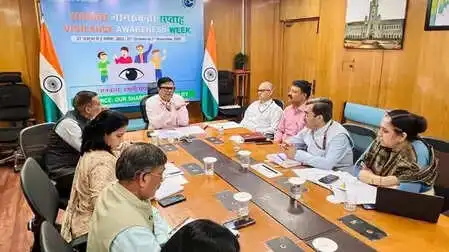
The Ministry of Education says that Artificial Intelligence and Computational Thinking education will develop logical thinking, analytical ability and problem solving skills in students. Also, this will prove to be the first step towards the use of Artificial Intelligence for public interest. The Education Ministry has also organized an important meeting regarding this effort. The stakeholder consultation meeting was attended by several expert institutions and academicians including CBSE, NCERT, Kendriya Vidyalaya Sangathan, Navodaya Vidyalaya Samiti.
On this occasion, CBSE announced that it has constituted an expert committee under the chairmanship of Professor Karthik Raman, IIT Madras, which will prepare the curriculum on Artificial Intelligence and Computational Thinking. According to School Education Secretary Sanjay Kumar, Artificial Intelligence education will be linked to ‘The World Around Us’. That is, it should be seen as a basic universal skill. The curriculum will be made comprehensive and inclusive. The specific ability of each child is priority. The job of policy makers is to set the minimum level and update it from time to time as per the needs of the new era.
Education Secretary Sanjay Kumar described teacher training and teaching material as the backbone of this initiative. He said that the quality, structure and coordination of the curriculum will be ensured through the coordination committee between NCERT and CBSE. Along with this, international experiences will be studied, but the outline will be prepared keeping in mind the Indian needs.
According to the Ministry of Education, resource materials, handbooks and digital resources will be ready by December 2025. Teacher training will also be completed class-wise and in a time-bound manner. According to the ministry, this initiative will not only empower children technologically but also enable them to develop ethical, creative and problem-solving based thinking, so that they can become responsible citizens of the future digital India.
—
GCB/DKP