
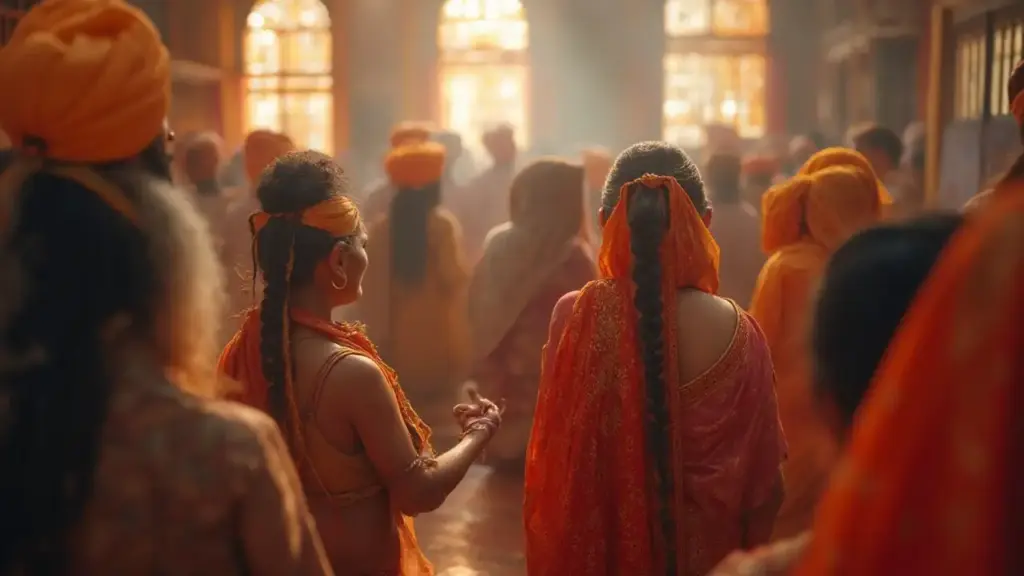
Sikhism is considered one of the major religions in the world that emphasizes equality, simplicity and natural lifestyle. “Kesh” i.e. not cutting hair is an important spiritual tradition in this religion. Although there is a misconception among many people that only women are not allowed to cut their hair in Sikhism, the reality is different from this.
The tradition of not cutting hair in Sikhism applies equally to both men and women. This is not a rule for any particular gender, but is part of a spiritual discipline that Guru Sahiban taught us to follow.
religious importance of hair
In Sikhism, Kesh is considered one of the “five Kakars”, which are required for every Sikh. Hair means accepting the body in its natural state. It is considered to be an honor to God’s creation.
According to Sikh belief, not cutting body hair is a sign of humility, acceptance, and surrender to natural life. It teaches that man should accept God’s creation rather than interfere with his appearance.
Are there different rules for women?
It is a common misconception that Sikhism has different rules for women. In reality, there is no discrimination between men and women in the teachings of Guru Granth Sahib. Therefore the rule of not cutting hair applies equally to both.
There have been many women in Sikh history who kept their hair and lived a religious life following the Khalsa tradition. This tradition is not based on any pressure or restriction, but on willingness and faith.
Hair and Spiritual Discipline
Hairstyle is not only linked to external appearance but also to internal discipline. It teaches a person patience, self-control and a sense of self-respect. In Sikhism it is believed that when a person accepts his natural form, he stays away from ego.
Along with this, turban (dastar) is also considered a symbol of respect and protection of hair. It is an important part of Sikh identity and conveys a message of self-respect and responsibility.
understanding in modern times
Even today, most Sikhs keep their hairstyle as a matter of religious belief, although some people take different decisions in their personal lives. In Sikh society, this subject is linked to personal belief and reverence rather than coercion.