
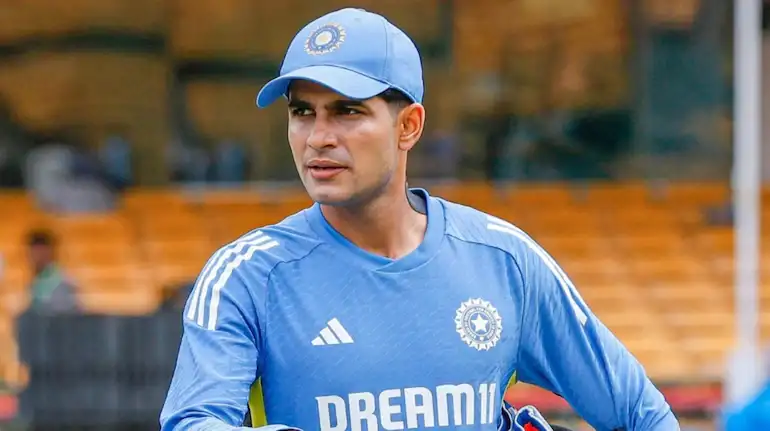
Shubman Gill is a great player in all three formats right now. He is probably the best ODI batsman of the team and the most promising player to carry forward the legacy of Virat Kohli and Rohit Sharma in this format. In Tests, he was not the best choice for captaincy, but he has tried his best to vindicate Ajit Agarkar and Gautam Gambhir’s decision, and proved the doubters wrong. It would not be a surprise if he plays a big role in transforming the Indian team in the longest format, and also takes the ODI team to new heights with his batting and leadership. This is all true. And it is also true that his continued inclusion in the T20 squad for the 2026 T20 World Cup was not in the best interest of the team.
The problems started when Shubman Gill was made the vice-captain, making it almost impossible to drop him from the team. Now, the selectors have taken the commendable decision of taking a step back and dropping Gill, bringing back Axar Patel as vice-captain and reintroducing Sanju Samson as an opener. Gill should not feel bad about this decision. Unfortunately, he has never fully justified his place as an opener in the T20 format.
Shubman Gill has opened for India 36 times in T20.
Shubman Gill has opened 36 times for India in T20, scoring 869 runs at a strike rate of 138.59, which includes one century and three half-centuries. Samson has got half the chances and has scored 559 runs at a strike rate of 178.02, which includes three centuries and one half-century. Gill was given the vice-captaincy because the selectors had confidence in his stats before 2025. But even then, in only two of his innings did he score more than 20 runs, at a rate faster than Samson’s overall strike rate. He worked hard to fit into India’s attacking style, batted aggressively and took risks, but even after getting so many opportunities, it did not work out for him. This clearly makes Samson a better option.
better team balance
India had to make some compromises to include Shubman Gill in the team. It was not the 26-year-old player’s fault. After dropping Sanju Samson, India needed a wicketkeeper. They brought in Jitesh Sharma, who is a middle-order batsman, and needed to make room for him, leading to the dropping of players like Rinku Singh and Axar Patel.
Indian team’s strategy is now more clear
Now, with the return of Samson and Ishan Kishan as the reserve opener and wicketkeeper, India’s strategy is much clearer. Now, if Samson’s form dips and he needs to be replaced, India will still have one wicketkeeper to open the innings, which will not impact the middle and lower-middle order. India can now choose Rinku, Akshar and Shivam Dubey in every match and, if necessary, replace one of them with Kuldeep Yadav depending on the situation. This will provide stability and security to everyone. Jitesh did not do much wrong. In fact, he was a better wicketkeeper than Samson, but his weakness against specific schemes like short balls reduced his chances. The combination of the three batsmen mentioned above, along with Hardik Pandya, makes India a formidable team.
A good decision for Shubman Gill
Shubhman Gill may be feeling disappointed right now, but perhaps in a few years he will realize that the move was beneficial for him. The disadvantage of being an all-format superstar is that you rarely get a break. Unlike Jasprit Bumrah, who is rested whenever possible as he has no leadership responsibilities, Gill has had to play every match in which he was not injured. The constantly changing strategies, the pressure of captaining a team in two formats, and then playing and captaining the IPL was never sustainable.
This break could prove to be a boon for Gill
Taking a break from the T20 team will give Shubman Gill time to train, rest and improve his overall mental health, which will enable him to focus more on ODIs and Tests. Kohli and Rohit are the best examples of how taking some time away from competitive cricket can have a positive impact on a player’s quality. This break could prove to be a blessing in disguise for Gill.