
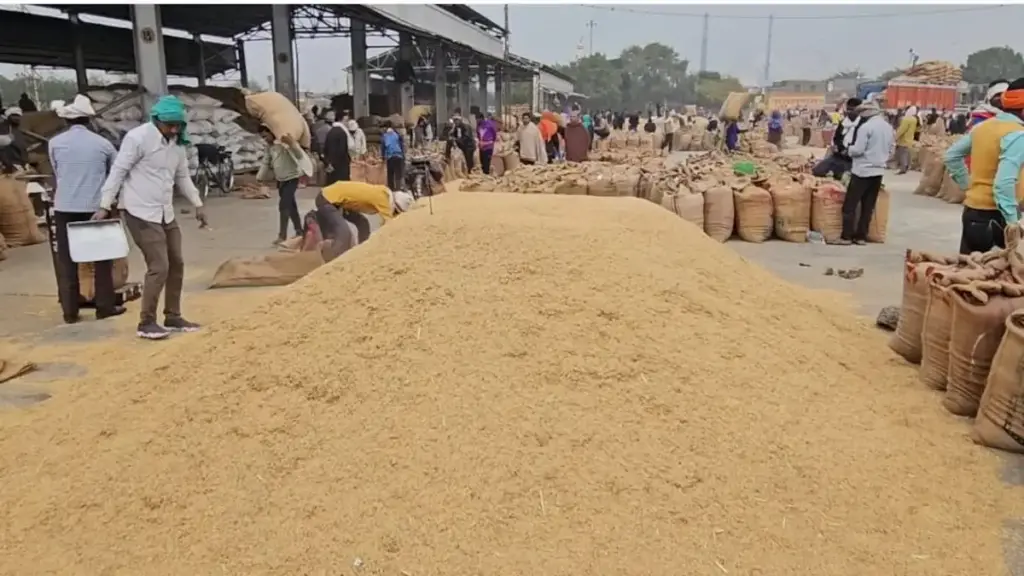
India is a big exporter of rice, which exports rice to 165 countries around the world. Bangladesh, Nepal, Cameroon, Papua New Guinea, Ivory Coast and the African country Benin are among the countries that import non-Basmati rice from India. At the same time, Iraq, Iran and Saudi Arabia import premium Basmati rice from India. However, India is currently facing difficulties in exporting premium Basmati rice to Iran, as 45 million tonnes of rice is exported in the global trade, of which India alone has a share of 22 million tonnes. This includes both Basmati and non-Basmati varieties.
Challenges facing India
India is finding it difficult to export premium Basmati rice to Iran as the Iranian government has withdrawn subsidies on import of the food item. As a result, Indian exporters have stopped their shipments. According to reports, consignments worth at least ₹2000 crore are currently stuck at international ports, awaiting clearance from Iran. It is being told that after the Iranian Rial reached a record low against the US Dollar, the Iranian government stopped the subsidized exchange rate on the import of food items.
Effect of removal of subsidy on exports
Removing subsidies hurts exporters as they have to pay full taxes and duties on their products. This increases costs, making goods expensive for domestic consumers. Removal of subsidies has a direct impact on exporters’ profits, and sometimes puts them at a disadvantage compared to exporters from other countries. This is the reason why producers and processors of India’s main basmati growing states Punjab and Haryana have been affected by this decision of Iran, which was affected by US sanctions.
Why did the Iranian government take this decision? The Iranian government has decided to deposit subsidy money directly into the bank accounts of its citizens so that they can buy food and other essential items as per their needs. The government wants that the benefits of subsidies should reach the people directly. In this regard, Iran has announced that it will provide a subsidy of 600 Iranian Rials to every citizen for the next four months.
The government believes that despite spending billions of riyals on the subsidized exchange rate, the benefits are not reaching the masses, and people are struggling with rising inflation. The benefits of import subsidies are not reaching consumers because many sectors are arbitrarily fixing the prices of imported goods using the subsidized exchange rate. Due to this the activity of black market is increasing.
Indian exporters worried
Ranjit Singh Joson, vice-president of the Punjab Rice Millers Association, told Hindustan Times, “Due to the sharp decline in the Iranian rial against the US dollar, which has reached an all-time low, the Iranian government has refused to continue the subsidy on food imports that it has been providing for many years. This is making exporters hesitant to continue the business.”
Earlier trade with Iran was through barter system (exchange of goods) as banking channels were limited due to US sanctions. When India stopped importing Iranian oil, this system ended. “Despite this, Iran continued to import food items like tea, basmati rice and medicines from India, but now it seems that these imports are also being cut,” Joson said.