
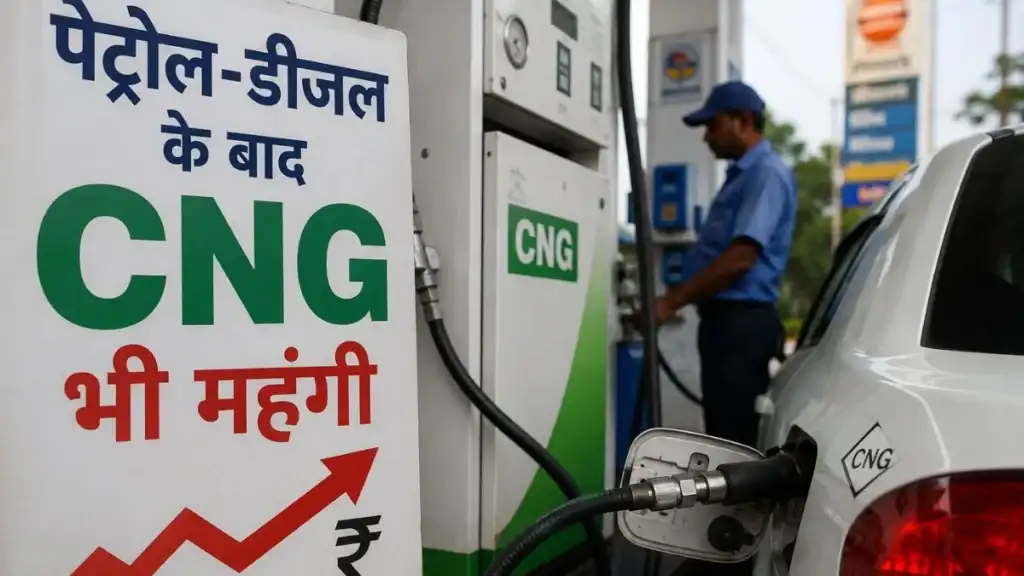
After the third hike in petrol and diesel prices in Delhi-NCR in just 10 days, the common man has got a “double dose” of inflation; Actually, CNG prices have been increased once again in Delhi. This time, the price of CNG has been increased by ₹1 per kg, taking the current price of CNG in Delhi to ₹81.09 per kg. With the implementation of these new rates, the cost of fuel for auto-rickshaws, taxis and private vehicles has further increased. This increase is being considered as another blow for those who are already troubled by the fluctuations in the prices of petrol and diesel and general inflation.
Direct impact on transportation costs
The increase in CNG prices will have the biggest impact on auto-rickshaws, taxis and cab services. Lakhs of people in Delhi-NCR depend on CNG-powered vehicles for their daily public transportation needs. As fuel becomes costlier, operating costs for drivers will increase – a burden that may ultimately have to be passed on to passengers in the form of increased fares. Auto-rickshaw drivers say their earnings are already limited, and frequent increases in fuel prices are making it increasingly difficult for them to continue their work. Many drivers have also appealed to the government for relief or subsidy.
Consumers already under pressure
The prices of petrol and diesel remain high in Delhi. In this backdrop, the increase in CNG prices will put additional burden on the monthly budget of common households. This will have a direct financial impact, especially on those who depend on CNG-powered vehicles for office, school and other activities. Experts attribute the rising domestic fuel costs to fluctuations in global energy markets and instability in the supply chain. India imports a large portion of its energy needs, so global price trends have a direct and immediate impact on the domestic market.
fear of rising inflation
The increase in CNG prices is expected to impact not only transportation costs but also freight charges and prices of essential commodities. It is expected that the prices of vegetables, fruits and daily essentials will increase due to increase in transportation costs. If fuel prices do not stabilize in the coming days, inflationary pressure may increase further, which will further increase the problems of the common man.