
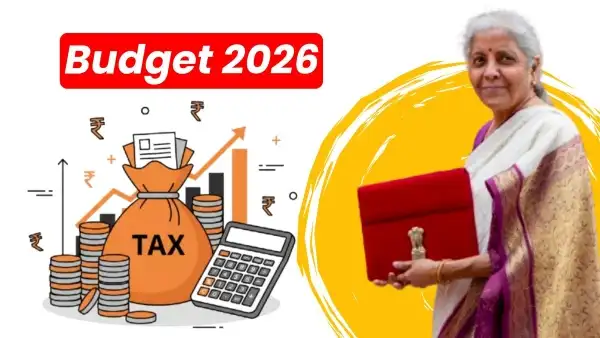
The Union Budget will be presented on 1 February. Ahead of this budget, tax payers are wondering about the future of the old tax system, as almost 95% of the people have already shifted to the new tax system. The government has already made the new tax system the default option, and its focus is clearly on this new system. Meanwhile, people are wondering whether the government may announce complete abolition of the old tax system in the budget.
What will happen to the old tax system?
While experts believe that it is difficult to completely eliminate the old tax system in this budget, the strategy of gradually making it redundant is certainly possible. The continuous changes made to the new tax system over the last few years clearly show the government’s intention to create a simpler, less exemption-based and less controversial tax system.
The new tax system is based on this philosophy, with lower tax slabs and removal of most exemptions and deductions. However, the old tax system is still beneficial for those who have investment options like Home Loan, HRA, LIC, PPF, ELSS and NPS, that is, they are investing in these options. Experts suggest that in this budget, the government can take steps to make the new tax system more popular, thereby encouraging the remaining tax payers to switch from the old to the new system.
Efforts to popularize the new tax system
The biggest step in this direction could be to increase the standard deduction. Currently, the new tax system gives a standard deduction of ₹75,000. The government can increase it to ₹1 lakh. This will directly benefit salary earners. Currently, there is no income tax on salaries up to ₹12.75 lakh, including standard deduction.
Another important change could be the inclusion of NPS (National Pension Scheme) in the new tax system. Currently, the old tax system allows an additional deduction of ₹50,000 on NPS contributions, this benefit is not available in the new tax system. If the government also makes NPS contributions (especially employer contributions) tax-free or eligible for deduction under the new tax system, it will boost retirement savings and make the new system more attractive for corporate employees.
In the old tax system, salaried people got the benefit of standard deduction up to ₹50,000. Additionally, there are deductions available under Section 80C on investments in PF, LIC, and ELSS up to ₹1.5 lakh, and under Section 80D on health insurance premiums, as well as HRA and home loan interest. The tax slabs in this tax system are 0% on income up to ₹2.5 lakh, 5% on income up to ₹5 lakh, 20% on income up to ₹10 lakh, and 30% on income above ₹10 lakh.