
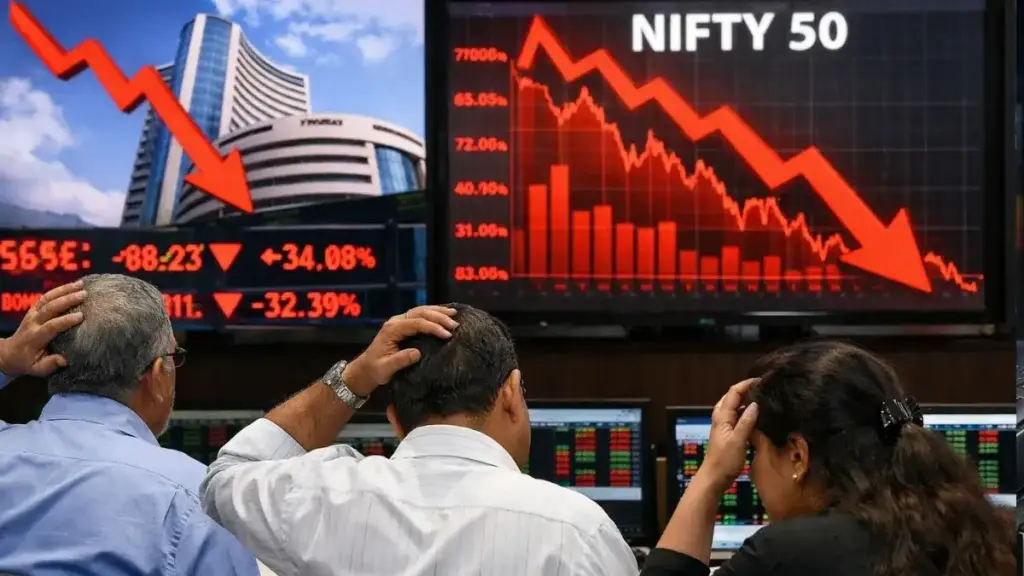
The Indian stock market started with heavy pressure on the first trading day of the week. Both Bombay Stock Exchange (BSE) Sensex and National Stock Exchange (NSE) Nifty were seen trading in the red. There was a decline of about Rs 15,003 crore in investors’ wealth in early trading, which created an atmosphere of concern in the market.
Sensex witnessed a weakness of hundreds of points during trading, while Nifty also slipped below important levels. There was selling pressure in almost all major sectors in the market—banking, IT, auto, metal and financial stocks.
Why did the stock market crash?
According to experts, the biggest reason behind the market decline is the increased geopolitical tension in West Asia. The increasing tension between America and Iran and the sharp rise in global crude oil prices have increased the concern of investors. According to reports, the prices of Brent crude oil reached around $79 per barrel, due to which the fear of rising inflation and pressure on the economy of oil importing countries like India has increased.
Rupee’s weakness increases concerns
Another major reason for pressure on the market was the weakness in the Indian rupee. The concern of foreign investors has increased due to the fall of the rupee against the dollar. Along with this, increase in bond yields and weak signals from global markets also affected the sentiment of the domestic market.
Which sectors are under the most pressure?
In Monday’s trading, maximum selling was seen in banking, auto, metal and financial stocks. Almost all major sectoral indices traded in the red. Investors prioritized profit booking while staying away from risky stocks, which created additional pressure on the market.
Will the decline continue further?
Market experts believe that in the coming days, investors will keep an eye on crude oil prices, US-Iran tension, activities of foreign investors and quarterly results of companies. If global conditions normalize and oil prices soften, the market may see recovery. However, at present investors are being advised to be cautious and avoid making big investments in haste.
However, there is also a positive sign that in the beginning of July, foreign portfolio investors (FPIs) have started buying again in the Indian market, which may support the market in the long term. Experts say the current decline is mainly linked to global uncertainties, while the fundamental indicators of the Indian economy still remain relatively strong.