
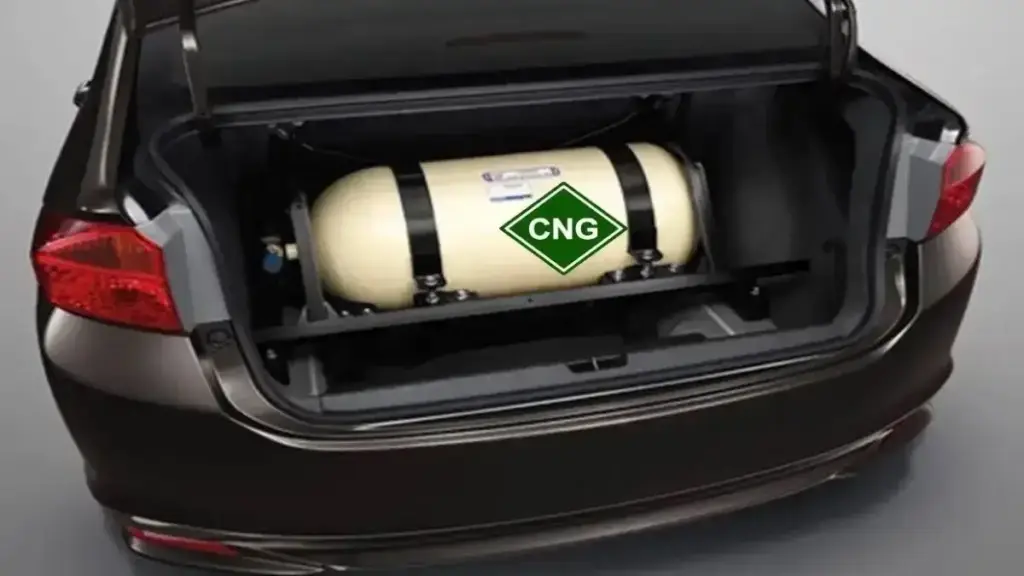
Currently, temperatures are continuously rising across the country, and its impact is now clearly visible – not only on people, but also on vehicles. This season is considered a time when drivers, especially those driving CNG cars, should be more careful. Amidst the rising prices of petrol and diesel, a large number of people are choosing CNG cars, as it is considered to be an economical option that gives the best mileage. However, if CNG cars are not maintained properly during the scorching heat, even a small mistake can lead to a major accident.
During the summer months, rising temperatures put more stress on the CNG tank and gas system. As a result, if timely inspection and servicing is not done, the risk of incidents such as gas leaks, engine failure or fire increases significantly. This is why CNG car owners should pay special attention to some important things in this season. So, let us now explain why CNG cylinders can explode like a bomb in high heat – and which specific parts of your car you should check immediately.
Filling the CNG tank to full capacity can be expensive
One of the most important precautions to be taken during the summer season is to avoid filling the CNG tank to its full capacity. At higher temperatures, the gas expands, increasing the pressure inside the cylinder. If there is no room left for gas to expand in the tank, the risk of technical failure increases. Experts recommend that filling the tank slightly less than its full capacity during the summer months is a safe practice. As a result, experts often recommend filling the tank with 2 to 3 kilograms less gas than its full capacity.
Never ignore the smell of a gas leak
If you smell any gas like smell in or around your car, you should not take it lightly under any circumstances. This could be a clear sign of a CNG leak. In such a situation, you should immediately stop the vehicle and get it checked at a service center. Experts warn that even a small leak can eventually lead to a major accident.
Check CNG system from time to time
During summers, it becomes very important to check the CNG pipeline, regulator, fittings and valves regularly. If any cut, rust or looseness is found anywhere in the piping, it should be replaced immediately. Getting timely servicing done at an authorized service center not only ensures safety but also helps in maintaining peak engine performance.
Hydro test is also necessary
It is necessary to conduct hydro test to check the structural integrity of the CNG tank. This test finds out whether the cylinder is capable of withstanding high pressure or not. According to the rules, it is mandatory to get this test done after a fixed time interval. Old or damaged cylinders can prove to be especially dangerous during the summer months. If your car’s hydro test has not been done for a long time, it is advisable to get it done as soon as possible.
Pay attention to the engine and spark plugs
Engines of CNG running cars operate at higher temperatures than petrol cars. The engine can overheat quickly in summer; Therefore, it is important to check the air filter and spark plugs regularly. A bad spark plug can cause a car to misfire, which can put too much stress on the engine. Conversely, a clogged or dirty air filter can reduce fuel economy (mileage).
It is not good to drive only in CNG mode
Many people always keep their cars in CNG mode to save money; However, experts do not recommend this method. It is important to change the fuel mode from time to time, as this ensures that all engine components function properly and increases their overall lifespan. Many manufacturers also recommend starting the vehicle in petrol mode only.
Maintain correct air pressure in tires
In summer, the road surface becomes very hot, which directly affects the tyres. Therefore, it is important to maintain the correct air pressure in the tyres. Having too much or too little air pressure in tires can both prove dangerous. Not having proper air pressure in tires not only affects fuel economy but also increases the risk of accidents.