
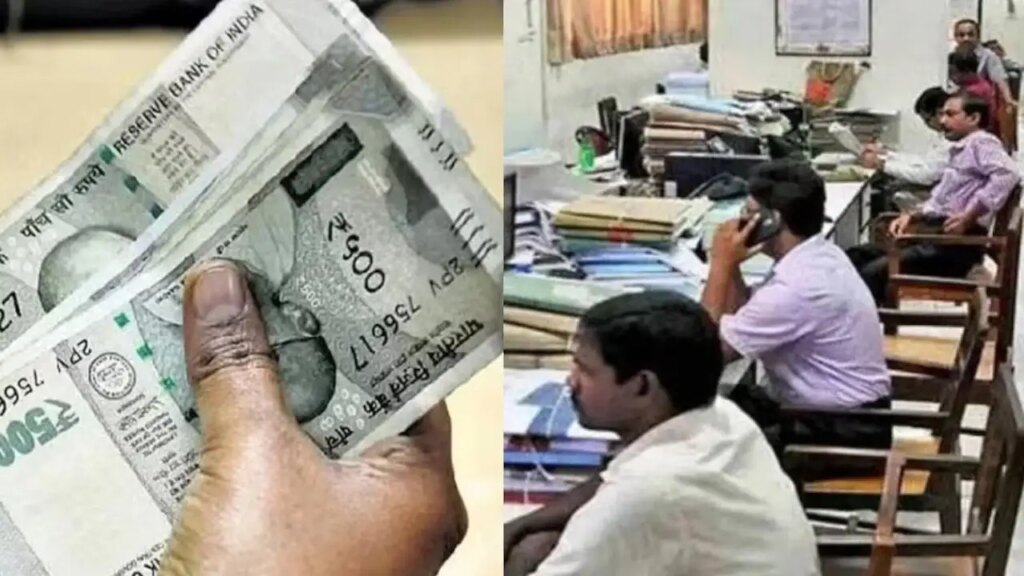
The government has approved a 2% increase in Dearness Allowance (DA) and Dearness Relief (DR) for central government employees. The government has increased DA-DR from 58% to 60%. This increase will be effective from January 1, 2026. This decision will cost the government an additional amount of ₹6,791 crore every year. Earlier, in October, dearness allowance was increased from 55% to 58%. The previous hike was supposed to be effective from July 1, 2025, and was paid with the outstanding amount. The announcement was made during the cabinet meeting held in Delhi on Saturday (April 18), which was chaired by Prime Minister Narendra Modi. The move is expected to benefit about 50.5 lakh employees and 68.3 lakh pensioners. The central government makes changes to Dearness Allowance (DA) and Dearness Relief (DR) twice a year—in January and July. This decision increases the monthly salary of employees and pension of pensioners.
What is DA, and why is it important?
Dearness Allowance (DA) is an adjustment for changes in the ‘cost-of-living’ paid to government employees. It is calculated as a percentage of basic salary. Its main objective is to protect the real income of employees amid rising prices, so that their salaries can increase along with inflation.
Demand for basic salary of ₹69,000 under 8th Pay Commission
The decision comes at a time when employee unions are demanding major changes in the pay structure under the 8th Pay Commission. In its memorandum, the National Council-Joint Consultative Mechanism (NC-JCM) has sought a higher fitment factor of 3.83. If this demand is accepted, the minimum basic pay may increase from ₹18,000 to around ₹69,000. The organization has also proposed to include dependent parents in the definition of ‘family’ for the purposes of pay calculations, as well as to remove the existing pay anomalies. However, the timeline for implementing the 8th Pay Commission has not been announced yet. There is speculation that it may be implemented soon; Still, it may have to wait until 2028 for its full implementation.
What will happen to DA till the implementation of 8th Pay Commission?
Until the new pay commission is implemented, dearness allowance (DA) will continue to be calculated as a percentage of basic pay. It is revised every six months—typically in January and July. This means that payment of dearness allowance will continue till the implementation of the 8th Pay Commission. Once the commission is constituted, the existing DA will be merged with the basic pay. As a result, the existing DA rate—which is currently 58%—will come down to zero.
Revision of salary, pension and allowances
The main objective of the 8th Central Pay Commission is to revise the salaries, pensions and allowances of central government employees. In this process, factors like inflation, employee needs and financial capacity of the government will be taken into account. The Central Government approved the ‘Terms of Reference’ (i.e., the terms of operation) for the 8th Pay Commission on October 28, 2025. After its formation, the commission is expected to submit its recommendations within 18 months.
Understanding Pay Calculation Under 8th Pay Scale
The extent of increase in basic pay depends on the ‘fitment factor’ and ‘DA merger’. Under the 7th Pay Commission, the fitment factor was 2.57; Under the 8th Pay Commission, this factor may increase to 3.83. In every pay commission cycle, Dearness Allowance (DA) comes down to zero. This happens because the new basic pay is designed from the very beginning taking into account the current inflation levels. After this, DA again slowly starts accumulating and increasing. At present, DA is 60% of the basic pay. After the DA component is removed, the apparent increase in total pay (comprising basic pay + DA + HRA) may initially seem somewhat small, as 60% of DA will no longer be included in the calculation.