
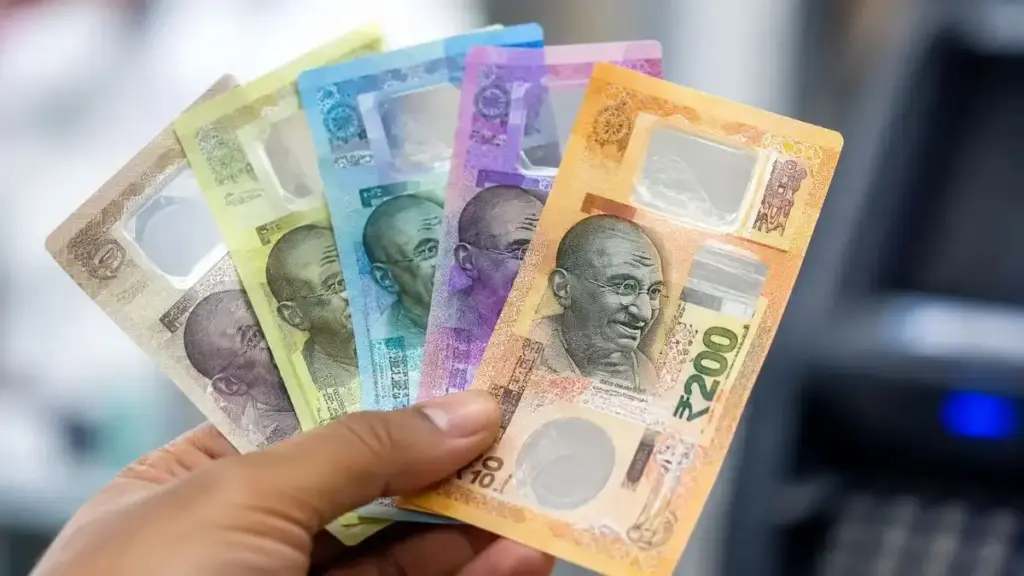
A big and modern change may soon be seen in the Indian currency market. The Reserve Bank of India (RBI) is working rapidly to replace traditional paper notes with plastic – or polymer – notes to make the country’s cash system completely secure and sustainable. This important issue was discussed in detail in the recent high-level meetings of the RBI Board in Patna and Mumbai. The move is driven by challenges the central bank has been trying to address for a long time, such as recurring printing costs, rapidly growing demand for cash circulation and the short life of existing cotton-paper notes. Before we proceed further, let us understand how much it costs to print plastic notes and how they compare to paper notes.
How much does it cost to print polymer notes?
Polymer notes are made using a special type of polypropylene plastic substrate instead of paper made from cotton fibers. These notes have advanced security features to completely prevent counterfeit notes and fraud. These features include transparent windows, embedded holographic elements, and strong, advanced security layers. Due to the use of this advanced technology, the initial production cost of polymer notes is estimated to be two to three times higher than that of standard paper notes. In fact, while the RBI currently spends ₹1 to ₹3 on printing a standard paper note, the initial cost of manufacturing a polymer note of the same denomination may be ₹2 to ₹6 per note.
How much does it cost to print paper money?
The conventional paper notes currently used by the RBI are mainly made of cotton. The actual cost of printing these notes is determined by their denomination – i.e. the face value of the note. Generally, this cost ranges between ₹1 to ₹3 per note. For example, printing a ₹100 note – one of the most prevalent denominations – costs the Central Bank approximately ₹1.51 to ₹1.77. Similarly, for higher denomination notes, the cost of printing a ₹500 note ranges from about ₹2.29 to ₹3. These figures clearly show that printing costs vary depending on the face value of the note and the complexity of its security features.
**Printing plastic notes vs. paper notes: which costs more?**
To understand the economic aspects of printing plastic (polymer) notes, it is important to analyze both the initial costs and the long-term benefits. First of all, printing plastic notes is certainly much more expensive than printing regular paper notes. The main reasons for this are the special polymer material used (especially BOPP) and very advanced security features, which are almost impossible to copy. However, despite the high initial cost, in the long run this system proves to be more economical and beneficial for the Reserve Bank. Being made of plastic, these new notes remain safe in circulation and can be used for three to four times longer than normal paper notes.
**Key Features and Current Status of Plastic Notes**
Plastic currency is very durable and, unlike normal notes, does not tear easily during use. The most important thing is that water, sweat or any kind of moisture does not affect them, due to which they do not get spoiled. With this feature, the Reserve Bank will be freed forever from the trouble and huge expense of frequently exchanging old notes and printing new notes, which will save a lot of money for the government exchequer. Talking about the current status of their implementation, the Reserve Bank of India has been considering plans to introduce polymer notes in the Indian market for a long time. From time to time, there are reports about pilot projects – i.e. trial runs – of circulation of lower denomination notes (such as ₹10 or ₹20) in select cities. However, the reality is that cotton paper notes are being used as the main currency across the country and complete replacement of plastic notes has not taken place yet.
**Cost of printing low value notes**
According to various reports and official data, the cost of printing notes varies significantly depending on the security features and design of each denomination. Specifically, the cost of printing a ₹10 paper note is approximately ₹1.01. At the same time, the cost of printing ₹ 20 note is the lowest, i.e. about ₹ 1 per note. Additionally, the Reserve Bank incurs a production cost of approximately ₹1.22 to produce the medium value ₹50 paper note.
**Cost of printing high value notes**
Similarly, if we talk about ₹10 to ₹200 notes, the total cost of printing them comes between ₹1.20 to ₹1.51, depending on the specifications used in making them. Currently, the cost of printing the ₹200 note is the highest; The printing cost of one note is around ₹2.93, which is due to its unique design and security standards. In contrast, the cost of printing the ₹500 note – the highest value note currently in circulation – has declined significantly due to recent technological improvements. Now it costs the Reserve Bank of India to print a new ₹500 note at about ₹2.29, which is quite reasonable considering the actual value of the note.