
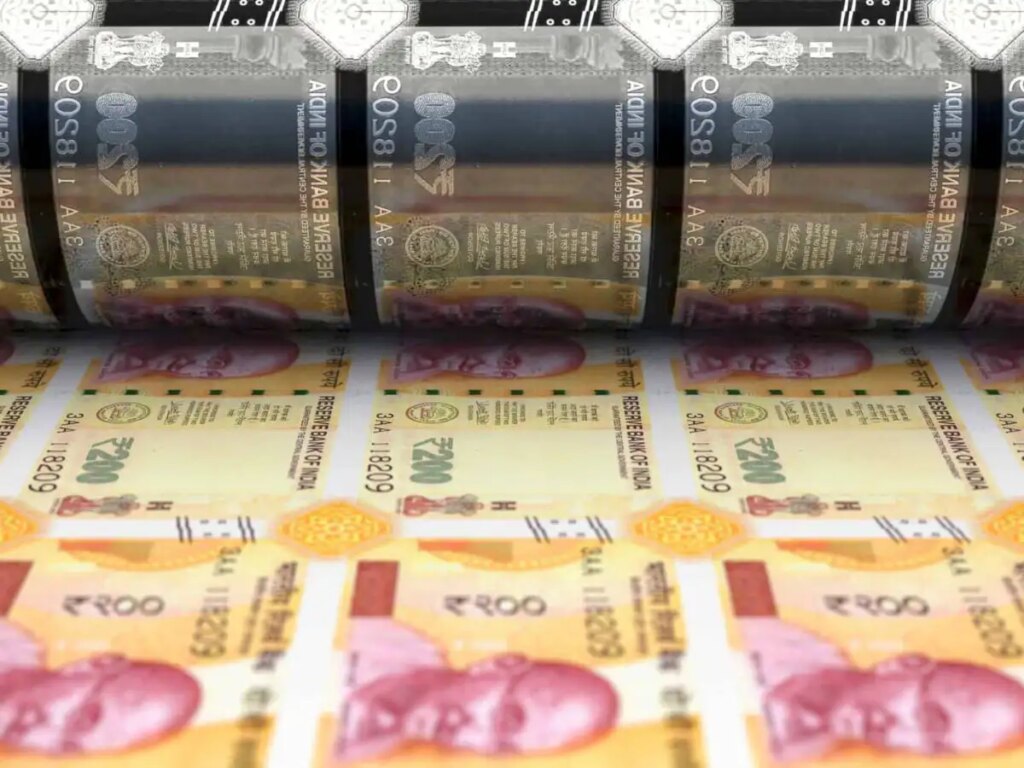
Whenever there is talk of inflation, cash shortage or demonetization, a question comes to everyone’s mind: Who actually decides how much currency should be printed in India? Actually, printing of currency in India is done under a legal and economic process, which involves both the Reserve Bank of India (RBI) and the Central Government.
Who has the main authority to issue currency?
The Reserve Bank of India plays the biggest role in deciding how much currency will be printed. Under Section 22 of the Reserve Bank of India Act, 1934, the RBI has the sole legal authority to issue banknotes in India. This includes all notes from ₹2 to ₹2000. However, this power does not mean that the RBI prints money arbitrarily. Every year, the RBI estimates how much currency the economy will need. This estimate is based on analysis of GDP growth, inflation trends, withdrawal of old or damaged notes and changes in payment habits, such as increase in digital transactions.
What is the role of the central government?
While the RBI anticipates and plans the currency needs, the Government of India takes the final call on certain aspects. Under Section 25 of the RBI Act, the central government approves the design, size, security features and denomination of banknotes. The special thing is that ₹ 1 notes and all coins are issued directly by the government under the Coinage Act, 2011.
minimum reserve system
India follows the Minimum Reserve System, which was implemented in 1956. Under this system, the RBI is required to maintain a minimum reserve of ₹200 crore before issuing any currency. Of this, at least ₹115 crore should be in the form of gold, and the remaining ₹85 crore should be held in the form of foreign currency or foreign securities.
How is the quantity of currency decided?
The number of notes to be printed is not determined by guesswork, but through economic modeling. RBI considers expected GDP growth, inflation levels, seasonal demand for cash and replacement of soiled or damaged notes under its clean note policy. Feedback from banks and regional offices of RBI also plays an important role in estimating demand at the ground level.