
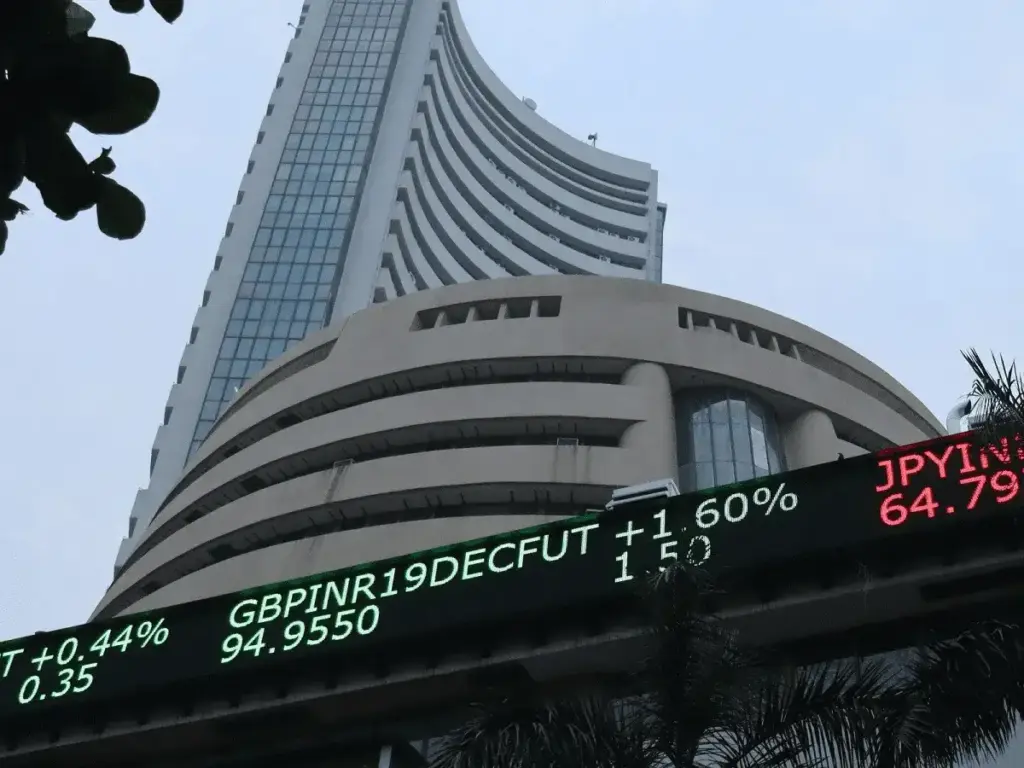
Foreign investors significantly reduced their holdings in the Indian stock market in 2025, pulling out nearly ₹2 lakh crore from six key sectors. This is one of the biggest selloffs seen in recent years, putting pressure on the stock market.
On Friday, December 26, the Sensex fell 352.28 points to close at 85056.43. Nifty also closed at 26042.30. As a result, the market capitalization of companies listed on BSE declined from ₹475 crore to ₹474 crore in a single session – a direct loss of ₹1 lakh crore in just one trading day.
Most sold sectors
According to NSDL data, foreign investors pulled out the most money from the IT sector (₹79,155 crore), followed by FMCG (₹32,361 crore), power (₹25,887 crore), healthcare (₹24,324 crore), consumer durables (₹21,567 crore), and consumer services (₹19,914 crore). Overall, FIIs have pulled ₹1.6 lakh crore from Indian equities so far in 2025. This indicates a major change in the thinking of foreign investors.
Shares purchased in other major markets
Foreign institutional investors were net sellers of Indian equities in 2025, selling shares worth $17.8 billion and increasing their holdings in other global equity markets such as China, Japan, Europe and the US, ICICI Securities said. This year, the Indian stock market has delivered average returns, while global markets have delivered gains of 12-61 per cent, and emerging markets have delivered returns of around 23 per cent.
This year, the hype around IPO was also a major reason for selling by foreign investors. During this period, foreign investors withdrew money from the secondary market and invested it in the primary market. ICICI Securities reported that FIIs invested $7.1 billion in IPOs this year, which is about 40 percent of the amount sold in the secondary market.
Meanwhile, domestic mutual funds continued to see strong inflows through SIPs, which stood at ₹3.2 lakh crore. This means that the money which was expected to support the stock market, went into IPOs. Although money came into domestic mutual funds through SIPs, it remained limited to these funds and did not benefit the broader market much.
FIIs withdrew ₹12,364 crore from the real estate sector, ₹10,894 crore from the financial services and ₹9,242 crore from the auto sector. However, investment increased in some sectors this year, with the highest investment in Telecom at ₹47,109 crore, followed by Oil & Gas at ₹9,076 crore and Services at ₹8,112 crore.
What will be the situation in 2026?
Experts believe that the situation will gradually improve. Amish Shah, India Research Head, Bank of America, also expressed a positive view on the return of foreign investors to the Indian stock market. “I think outflows will at least moderate, but whether this will lead to inflows is debatable,” he told ET Markets. However, he cited three main reasons for the $18 billion outflow likely to trend towards zero: expectations of nearly 12 per cent returns from the Nifty compared to just 4 per cent from the S&P 500, an expected 75 basis point interest rate cut by the US Federal Reserve – which has historically driven inflows into emerging markets – and a potential decline in the US dollar.