
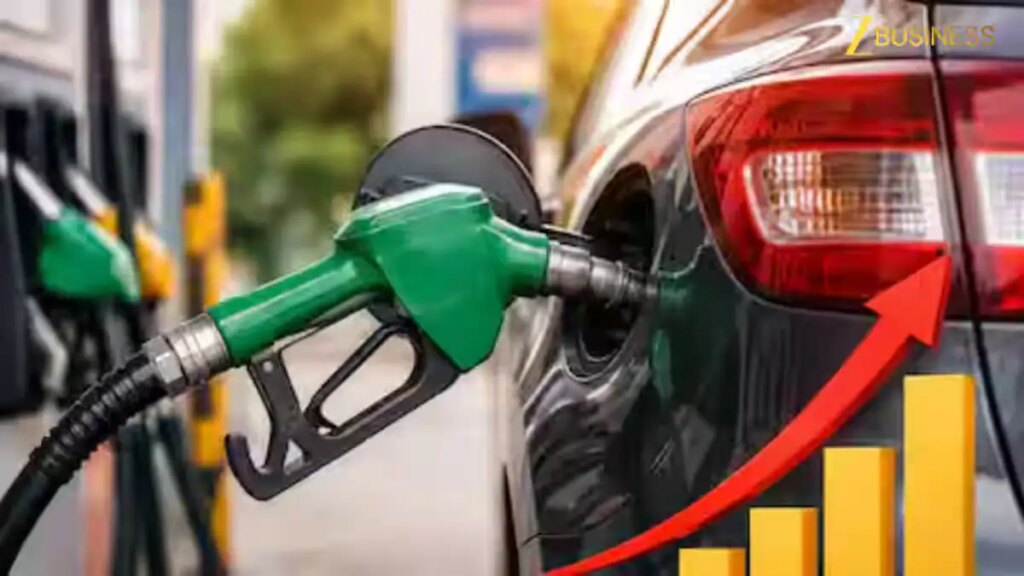
The ongoing tension in the Middle East is affecting many countries including India. The prices of petrol and diesel are continuously increasing in India. In a recent report, rating agency CRISIL said the rise in petrol and diesel prices could put new inflationary pressure on the Indian economy. In the coming months, the impact of increases in transportation and production costs may be directly reflected in consumer prices.
**Time to increase petrol and diesel prices**
15 May – For the first time, petrol and diesel prices were increased by ₹3 per litre.
May 19 – For the second time, prices increased by nearly 90 paise.
May 23 – Petrol became costlier by 87 paise and diesel by 91 paise.
May 25 – Petrol prices increased by ₹2.61 and diesel by ₹2.71.
Thus, in all four cases, the total increase in petrol and diesel prices is around ₹7.5 per litre. CRISIL suggests that if global crude oil prices remain high, there is a possibility of further price increases in the future.
**The effect can go up to ₹10**
According to the report, oil companies are gradually recovering their losses. As a result, the total increase in prices could eventually reach ₹10 per litre. CRISIL said this impact would be reflected in an increase in transportation costs across the economy, potentially leading to an increase in both food prices and headline inflation. The direct impact of the fuel price increase on the Consumer Price Index (CPI) – a key measure of inflation – is estimated to be about 36 basis points. If the total price increase reaches ₹10 per litre, the impact could increase to around 48 basis points.
**Biggest impact on transportation sector**
It is worth noting that about 71 percent of goods in India are transported by road. Fuel costs constitute about 42 percent of the operating costs in this sector. As a result, if fuel prices rise, freight and logistics costs will rise sharply, impacting the supply chain. The increase in transportation costs will have the biggest impact on goods that depend heavily on logistics – such as dairy products, tea, coffee, fruits, pulses, spices, eggs, meat and fish.
**Pressure on core inflation**
According to CRISIL, pressure on core inflation is likely to increase further as companies face rising costs of crude oil, gas and transportation. Besides, prices are expected to rise in sectors like textiles, electronics, wood, cement and ceramics. If demand remains stagnant, companies can either raise prices or adopt a strategy such as “contraction” – a process in which production volumes are reduced while prices remain unchanged. During the first two months, the average price of crude oil stood at about $112 per barrel, well above the estimated figure of $95. Due to this, there is continuous upward pressure on inflation.