
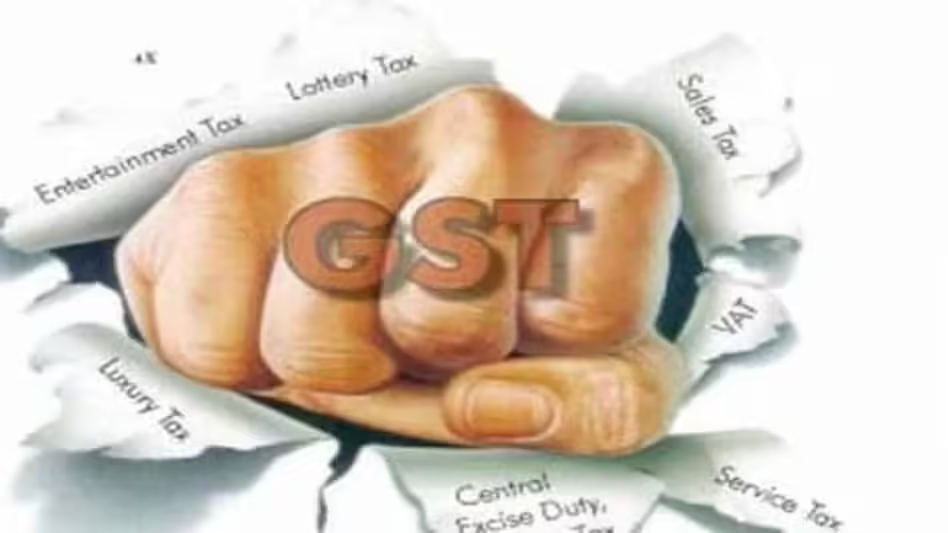
With the implementation of GST 2.0 in the country, this system of indirect tax collection will become even more simple and easy. However, this GST was named ‘Gabbar Singh Tax’ in 2017. By the way, it was earlier called the Goods and Services Tax (GST), but in view of its complexity, the opposition tried to surround the government. Congress leader Rahul Gandhi, criticizing GST, described it as ‘Gabbar Singh Tax’ of BJP. Rahul Gandhi called GST ‘Gabbar Singh Tax’ because according to him the government is looting the earnings of the poor through this tax. Just like Gabbar Singh, the villain of the film Sholay, used to forcibly recover from the villagers.
Apart from politics, GST is considered one of the biggest reforms of India so far. This made it easy for businesses to pay tax, reduced tax burden on the general public and improved from time to time. The average rate of GST in 2017 was 14.4%, which has come down to 11.6% by September 2019 and according to a SBI research report, it can decrease further to 9.5% in GST 2.0. The main objective of implementing GST was to implement a uniform tax system across the country rather than many different taxes. Now that GST 2.0 has come into force, its purpose is to make it simple and better for the common people.
People were confused with different slabs
When GST was implemented, it had four slabs of 5%, 12%, 18% and 28%. Different goods and services were placed in different slabs. However, in the beginning people were quite confused about it. The government initially kept so many slabs so that people on one side will get relief and the revenue of the government on the other side will remain. Initially the states feared revenue loss and they were guaranteed to compensate for five years. So it was not easy to take big decisions like reducing slabs in the beginning.
Technical difficulties were challenges
There were technical problems in the early GST. There were also problems like digital returns and invoice matching for small businesses. At that time the government’s priority was to stabilize the system rather than reducing slabs. Around 2020, the corona epidemic further spoiled the situation. The tax collection decreased, the government and the states increased the burden of health and welfare. At that time, the fiscal deficit would increase by reducing tax rates. However, after 2017, the rates have been changed several times. Many items were excluded from 28% slab.
Why GST 2.0 now?
The GST collection is continuously increasing after the epidemic. The system has strengthened due to better technology, strict investigation and low theft. Now the government is capable of borne by tax deduction. Earlier it was necessary to add small traders, remove technical flaws and make returns-refund easier. Large structural improvements are now possible depending on years of years of experience and data. The tax which was once called Gabbar Singh Tax has now become easier. It is expected that GST 2.0 will make compliance easier for both businessmen and the government and the general public will also benefit greatly.