
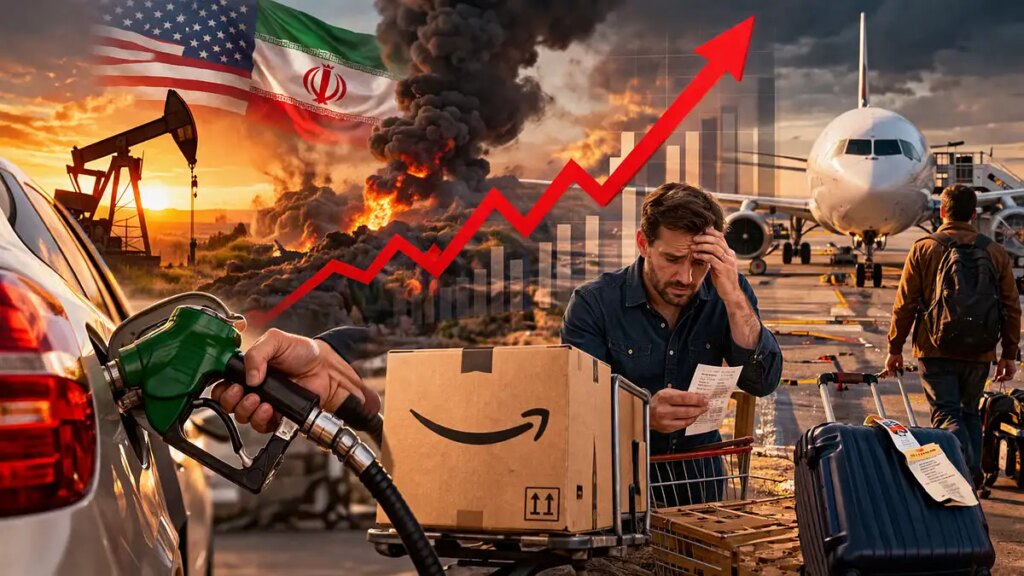
When there is a war between two countries, it is often the country that suffers the most losses that is neither an ally nor an enemy – that is, a country that is simply minding its own business. India was also in a similar situation during the US-Iran conflict. India was neither a participant in the war nor the aggressor; Nevertheless, the country suffered huge loss of life and property due to this conflict. Let us see in this analysis what loss India suffered during this conflict in the Middle East…
**An irreparable loss for India**
During the US-Iran confrontation, Indian sailors working in the Strait of Hormuz and the Persian Gulf had to pay a heavy price. These people worked on oil tankers and cargo ships; They had nothing to do with the war nor were they part of any military force. However, when missiles are fired and ships are targeted in the Strait of Hormuz, these sailors are placed in the most vulnerable position.
These were people who took jobs on foreign ships to help their families. Sailors from Kerala, Tamil Nadu, Gujarat, Maharashtra and Andhra Pradesh were never able to return home. The Indian government raised the issue strongly with both Iran and the US and made diplomatic efforts to bring back the bodies of those killed.
**Indian workers stranded in Gulf countries**
As soon as the conflict began, the lives of millions of Indian migrant workers in Gulf countries like UAE, Qatar, Oman and Saudi Arabia were in danger. Although they were not directly in the war zone, they were trapped there due to the closure of the Strait of Hormuz and restrictions on air travel. Even though there were no reports of large-scale casualties among Indians, their lives remained in danger. The Government of India evacuated thousands of Indians safely under ‘Operation Hormuz Safety’. Indian economy suffers loss due to increase in oil prices
According to a report by the International Food Policy Research Institute (IFPRI), the economic impact of the war on India was visible at three levels:
1. Increase in oil prices
After the war began, the price of crude oil increased from $82 per barrel to $100 per barrel. India imports 85% of its crude oil needs, a large portion of which comes through the Strait of Hormuz. When the Strait of Hormuz was closed, oil supplies were severely disrupted. According to IFPRI:
India coped to some extent with the economic pressure caused by the war, but it had to pay a price:
India’s crude oil import bill increased by about 25–30% compared to before the war.
Retail prices of petrol and diesel increased by Rs 8-12 per litre.
LPG cylinder prices increased by Rs 150-200, which directly affected the common kitchen.
India had to buy oil from countries like Russia, Iraq and Saudi Arabia, but longer routes and higher transportation costs resulted in additional costs of $5-7 per barrel.
Shipping costs alone increased by 40–50% as ships had to take longer routes to avoid the Strait of Hormuz.
India’s foreign exchange reserves came under pressure and decreased by about $15–20 billion during the war.
2. Obstruction in trade route
The Institute of South Asian Studies (ISAS) of the National University of Singapore published a paper on the impact of this conflict on India. It states:
Area Impact Estimates Trade deficit likely to widen to $25-30 billion Current Account Deficit (CAD) expected to widen to 2.5% of GDP from 1.2% Foreign exchange reserves expected to decline by $20-25 billion Rupee exchange rate to fall further by 2-3% against the dollar
3. Global inflationary pressure
A research paper published in the International Journal of Economics and Financial Management (IJEFM) has analyzed the impact of the war on India in depth. It states:
Pressure on fiscal deficit: To provide relief to consumers from rising oil prices, the government had to reduce excise duty. It is estimated that this resulted in a loss of approximately ₹1 lakh crore in government revenue.
Fertilizer crisis and food security: India imports 60% of its DAP fertilizer requirement and the entire potash requirement. The war led to a 66% increase in fertilizer prices, which had a direct impact on the cost of Kharif and Rabi crops.
Impact on stock market: Sensex and Nifty fell heavily amid fears of war and closure of the Strait of Hormuz. The Sensex fell nearly 3,000 points in a single week, causing investors to lose wealth worth crores of rupees.
Area of impact Estimated loss (IFPRI report) India’s GDP decline by 0.8% to 1.2% Domestic income decline by about 1.5% Increase in Consumer Price Index (CPI) Additional inflation by 1.8% to 2.5%
Did India succeed in this test?
According to a report by Times of India, India was successful in handling this crisis to some extent. The government increased purchases of cheap oil from Russia and Iraq, used strategic oil reserves, and resorted to the dollar-rupee swap system when necessary. The report also warns that if this war continues for a long time, combined with El Nino, it could prove to be a double whammy for India.
Although this war was fought thousands of miles away, its flame reached every home in India. The 30 sailors who could not return to their families are its biggest cost. The economic blow to the common man’s pocket is a reminder of the importance of the global economy.