
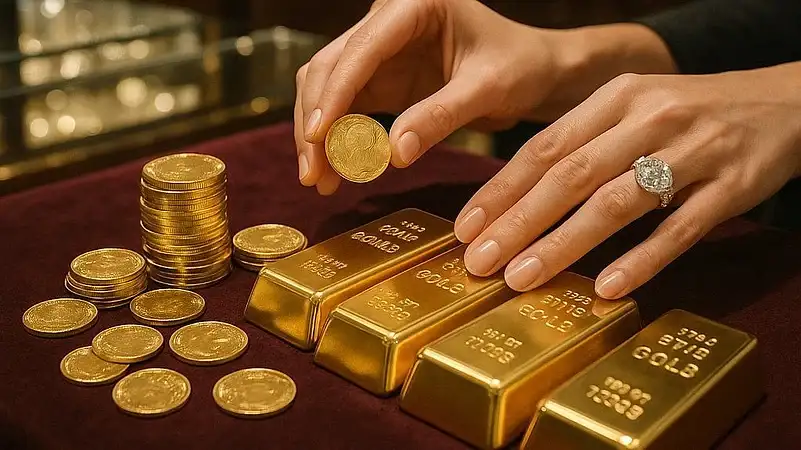
This year, gold prices have risen rapidly and have crossed $ 4,000 per ounce in the international market. However, Professor Ashwath Damodaran of New York University has raised questions on this. He believes that investors should deeply understand the truth behind it. According to Damodaran, gold is “obviously expensive”. In a blog post, he said that gold prices are projected to increase by 57% in 2025. Over the past decade, gold has risen from $1,060 to more than $4,000. However, this shine does not match its true qualities.
Professor Damodaran said that gold is often considered a means of protection from inflation and economic crisis. However, history shows that this relationship is not so straightforward. He pointed out that unlike stocks or bonds, gold does not generate any income. Therefore, it is more of a collectible than a financial asset. Its value largely depends on public perception and market sentiment.
Gold is being sold at a price higher than its value
To prove his point, Damodaran analyzed two historical ratios: gold-to-CPI (Consumer Price Index) and gold-to-silver. In October 2025, the gold-to-CPI ratio reached 17.81, almost six times higher than the historical average of 3. Similarly, the gold-to-silver ratio was 84.73, much higher than the historical average of 57.09. Both these figures show that gold is being sold at a higher price than its historical value. However, Damodaran also believes that if interest rates remain low and inflation remains low, these average ratios could change. This may bring some change in the valuation of gold. However, this change will be limited.
Prices are not affected by real factors
According to Professor Damodaran, the real story of gold lies in its ability to act as insurance. “Investors who include gold in their portfolios because of the protection it provides should understand that it is like buying insurance against a major accident,” he wrote. This is especially true for those who have the majority of their wealth invested in financial assets. Damodaran believes that the recent surge in prices may not be driven by real factors, but by fear. “Some people may have been lucky to be in the right place at the right time. But others may have anticipated the changing market dynamics, especially in 2025,” he said.
He also said, “If Jamie Dimon and Ray Dalio really say the market is a bubble, wouldn’t it be wise for them to own gold?” This question helps in understanding the demand for gold and the sentiment behind it. This means that when even big investors see uncertainty in the market, they may turn to gold, even if its price is high. This gives gold a kind of “fear premium”.