
After a long wait, the Free Trade Agreement (FTA) between India and the United Kingdom (UK) has officially come into force from today. With the implementation of this agreement, British cars, whiskey, clothes and footwear are expected to be available in India cheaper than before. At the same time, the doors of the British market have also opened more for Indian exporters. Under this historic trade agreement, now 99% of India’s products can be exported to UK at zero tariff (zero import duty). On the other hand, 99% of UK products will be imported into India with an average tariff of 3%. This is expected to give new impetus to trade between the two countries.
Business can reach 120 billion dollars by 2030
Experts believe that after the implementation of this agreement, there will be a sharp increase in bilateral trade between India and Britain. It is estimated that by 2030, trade between the two countries could double to $120 billion. This is also likely to bring huge benefits to trade, investment, employment and manufacturing sectors.
Agreement reached after three years of negotiations
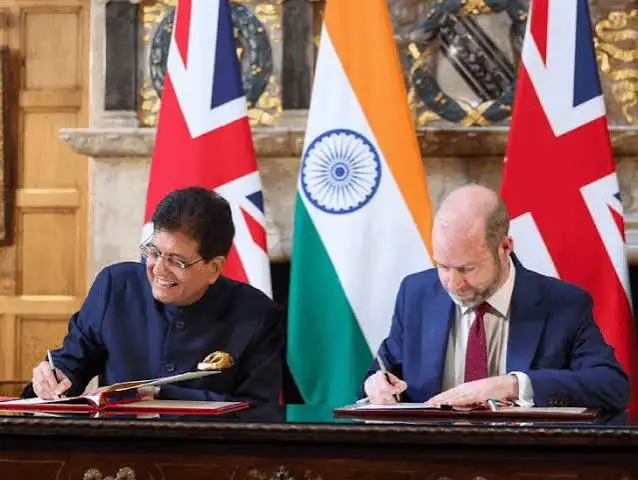
The journey to reach the India-UK Free Trade Agreement was not easy. After 14 rounds of talks in nearly three years, both the countries finalized this agreement. On July 24, 2025, India’s Commerce and Industry Minister Piyush Goyal and Britain’s Trade Minister Jonathan Reynolds signed this historic agreement in the presence of Prime Minister Narendra Modi and British Prime Minister Keir Starmer.
Consumers and industries will benefit
With the implementation of FTA, Indian consumers can get many premium products imported from Britain at lower prices. At the same time, exports of Indian industries, especially textiles, readymade garments, footwear, engineering goods, auto components, gems and jewellery, agriculture and marine products are expected to get a big boost.
Experts say that this agreement will strengthen India’s global trade strategy and make Indian companies more competitive in the UK market. Besides, new opportunities for investment, technology and economic cooperation will also open between the two countries.