
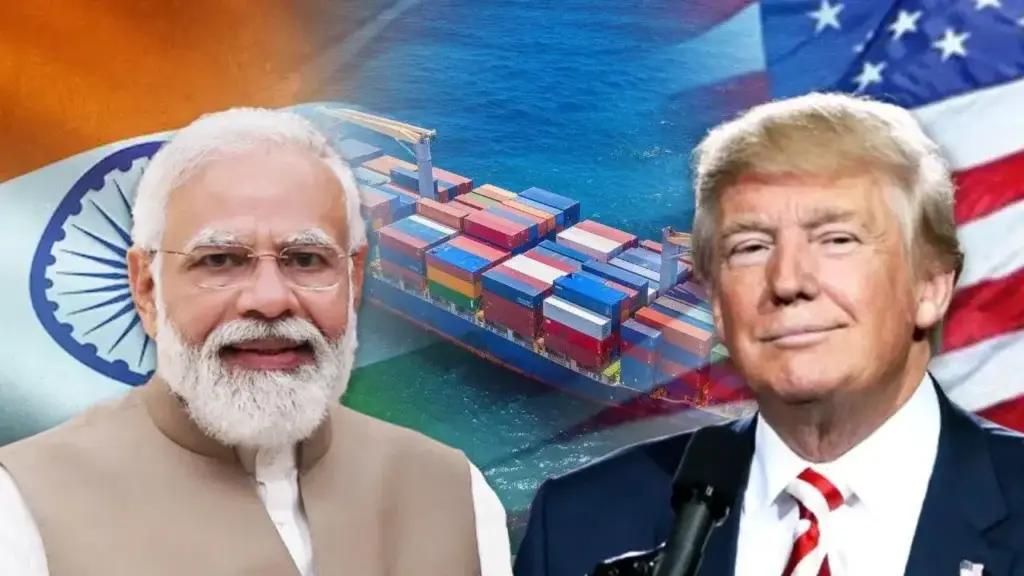
US President Donald Trump’s 50% higher tariff on India has affected different sectors. According to a recent report, India’s exports to the US have declined by more than 28% in just five months due to US tariffs. Due to decline in exports, various sectors have suffered losses worth billions of dollars. However, despite Trump’s tariff attack, the recovery of the Indian economy has surprised everyone. India’s GDP growth in the second quarter was better than expected at 8.2%. Let us understand which strategy worked for India.
How much loss from tariffs?
The US has always been India’s largest export market, but it has declined sharply due to the 50% US tariff. According to a new report by the Global Trade Research Initiative (GTRI), shipments from India to the US declined from $8.83 billion in May to $6.31 billion in October, a decline of 28.5% in just five months. The decline in India’s exports began after Trump imposed 10% tariffs on April 2 this year, and was further accelerated by the imposition of tariffs instead of 25% on August 7 and then 50% on August 27.
According to GTRI, the 50% tariff imposed by the US on Indian goods is the highest in the world. China was hit with a 30% tariff, while Japan was hit with a 15% tariff. US tariffs also hit tariff-free sectors like smartphones, pharmaceuticals and petroleum products, which declined 25.8% from $3.42 billion in May to $2.54 billion in October.
Despite such losses, GDP growth remains high
From the World Bank to the IMF, global agencies and organizations have acknowledged the rapid growth of the Indian economy. India has proved this. Despite the adverse impact of 50% tariffs, India’s GDP growth was a strong 8.2% in the second quarter. This is not the second consecutive quarter in which economic growth has exceeded expectations. A growth of 7.8% was seen in the June quarter.
Now the question is: While the tariff has caused a lot of damage to various sectors, which has reduced the country’s exports, then why has it not affected the growth of the economy? The strategy adopted by India to reduce the impact of US tariffs has proved effective. This is clear from the fact that India’s exports to the US declined by 11.9% in September alone, while India’s total exports increased by 6.75% that month. Other data also shows India’s adjustment to US tariffs. While India’s gems and jewelery exports to the US fell by 76%, their total exports declined by only 1.5%.
Which strategy worked for India?
In fact, looking at data from the gems and jewelery sector, US exports declined, but growth in the UAE, Hong Kong and Belgium supported the reduction in the impact of tariffs, leading to a slight decline in total exports. Many Indian sectors adopted diversification and turned to other markets. Good demand for auto parts also came from countries like Germany and Thailand. The Modi government immediately took several steps to reduce the impact of US tariffs, which provided considerable support to both trade and the economy. These measures increased domestic demand and led to large investments. GST reforms also had a direct impact on domestic demand. Meanwhile, manufacturing and service sectors played an important role in growing the economy.