
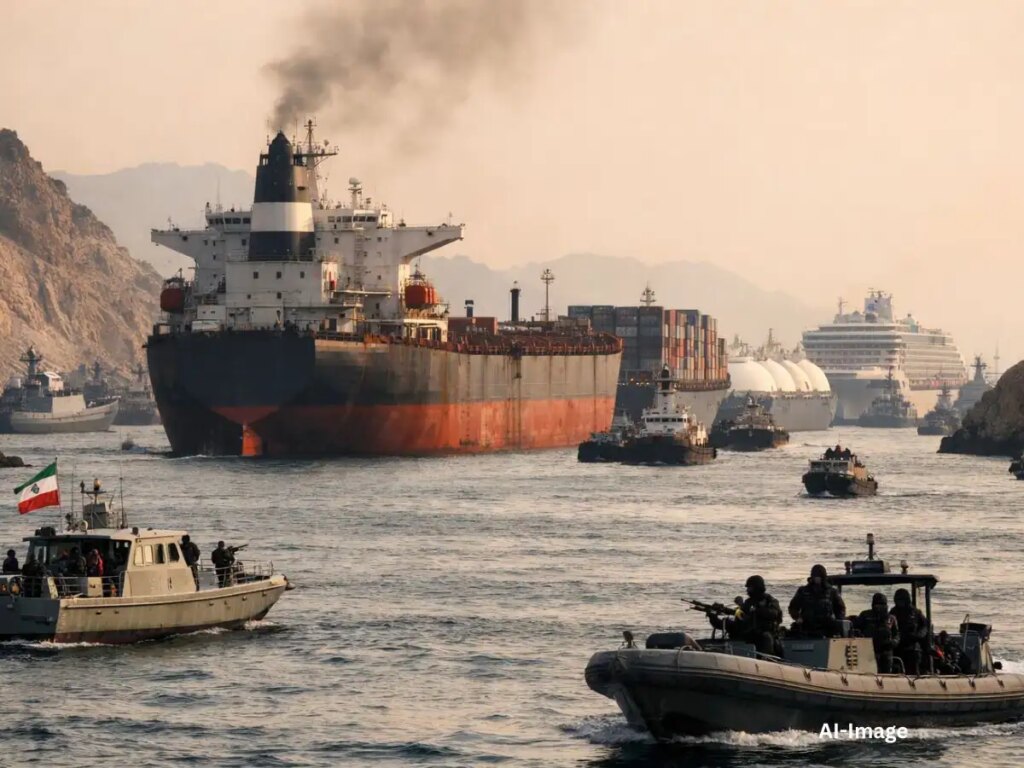
Iran has further strengthened its strategic hold on the Strait of Hormuz. Despite the ceasefire, Tehran continues to target shipping and use the waterway as a weapon to exert pressure on global markets. According to a report in *The New York Times*, maritime traffic in this area has almost completely come to a standstill. Before the conflict, about 130 ships passed through here daily; Now, only one ship passes every few days.
However, since the conflict began, more than 300 ships belonging to Iran have passed safely. Due to fear of attacks, many ships have started turning back midway, causing a complete loss of confidence in the safety of transportation. Experts say there is no longer any “freedom of navigation” in the region, and ships now have to seek Iran’s permission to pass through.
About 20 percent of the world’s oil supply passes through the Strait of Hormuz. Due to interruption in this flow, global oil supply has declined by about 10 percent. Meanwhile, fuel, gas and energy prices have risen sharply around the world. Shipping companies are hesitant to resume operations, as the sudden attacks have made the situation even more dangerous.
The United States has imposed a blockade aimed at stopping Iran’s oil exports. Although America claims that no Iranian ship has been able to escape the blockade, experts believe that some ships have still managed to escape. Currently, the US Navy has a limited presence in the region, and no large-scale naval escort system exists to ensure the safety of ships.
Having control over the Strait of Hormuz gives Iran considerable bargaining power in international negotiations. Despite facing retaliation, Tehran has managed to successfully maintain its ability to disrupt global trade. Ships are now forced to sail closer to Iranian waters instead of using main shipping routes—further strengthening Iran’s hold on the region.