
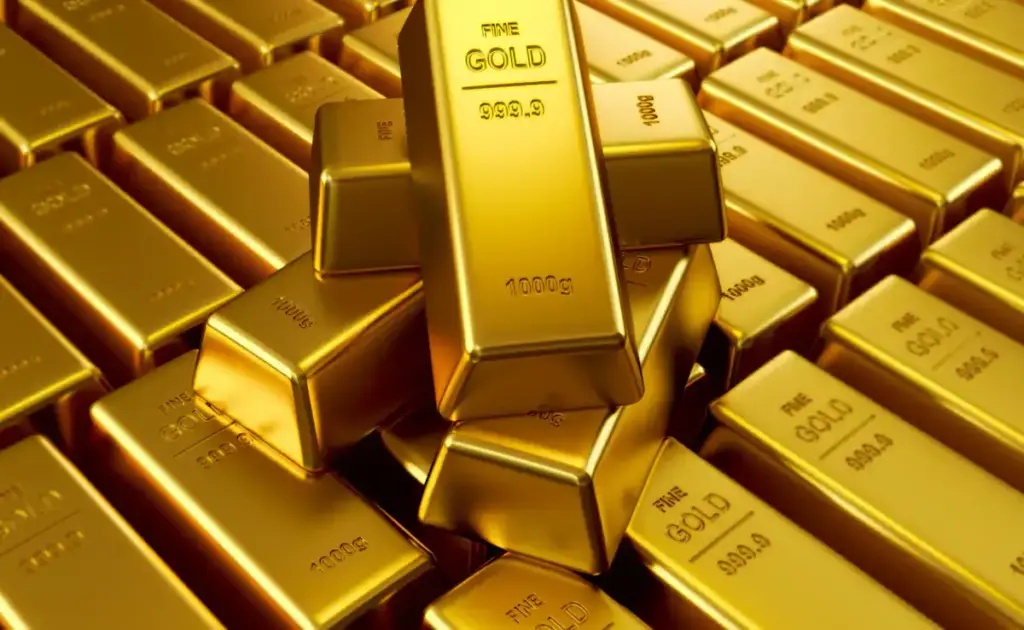
On Wednesday, the price of ten grams of gold in India crossed ₹ 121,000. Experts believe that gold prices will rise further in the coming months. According to Forbes India, the price of gold per ten grams in the year 2000 was ₹4,400. It increased to ₹20,728 in 2010 and ₹50,151 in 2020. But in the last five years only, the price of gold has crossed ₹100,000.
How long will this rise in gold prices continue and will these prices come down in the near future?
Given the demand for gold during the festival and wedding season in India, experts believe that this rise in gold prices is unlikely to stop. Meanwhile, Goldman Sachs has estimated in a research project that gold prices may rise by another 6 percent by mid-2026.
There are many reasons for the rapid rise in gold prices
The most basic reason is that amidst the ongoing military conflicts and economic turmoil around the world, people consider gold as a safe investment.
If we look at the trends of the last few years, investing in gold has never been a losing deal.
There have been only four calendar years in the last 20 years when gold prices fell, causing some losses to investors. However, these losses remained limited to single digits.
For example, gold prices declined by 4.50 percent in 2013, 7.9 percent in 2014, 6.65 percent in 2015 and 4.21 percent in 2021.
Therefore, when stock markets around the world are volatile and tariff uncertainty is at its peak, it is natural for investment in gold to increase.
Speaking to BBC Hindi earlier this year, market analyst Asif Iqbal had said that many investors are using gold as a hedging strategy in the current environment. Fearing losses in the stock market, they are looking for options to invest in gold. Asif Iqbal explains that one reason for uncertainty in the global market is Donald Trump, while the other reason is the ongoing war between Russia and Ukraine, and Israel and Hamas.
As a result, global conflicts have also affected gold prices. Another major reason for the rise in gold prices is the increasing purchases of gold by central banks around the world. Due to the increasing uncertainty regarding tariffs during Donald Trump’s tenure and the ongoing turmoil in the global market, central banks around the world are buying more and more gold. According to a report in the Economic Times, due to the rising prices of gold, Regardless, central banks around the world are buying gold to diversify their foreign exchange reserves and reduce their dependence on the US dollar.
According to World Gold Council data, central banks around the world added a net 15 tons of gold to their reserves in August. According to a report by Goldman Sachs, if the US Federal Reserve cuts interest rates, investors turn to gold, and as people invest in gold, the price of gold also increases.
De-dollarization is also a factor
Experts say that when a country moves away from the dollar or distances itself from it, it is called de-dollarization. Countries often keep dollars or US bonds in their foreign exchange reserves and keep increasing them continuously. This is because they have to pay in dollars for the import of crude oil and other commodities.
This trend with the dollar has persisted for years
However, in recent years, US policies have increased concerns about the dollar in many countries. Following various US sanctions imposed on Russia in 2015 and 2016, some countries have become cautious about the dollar.