
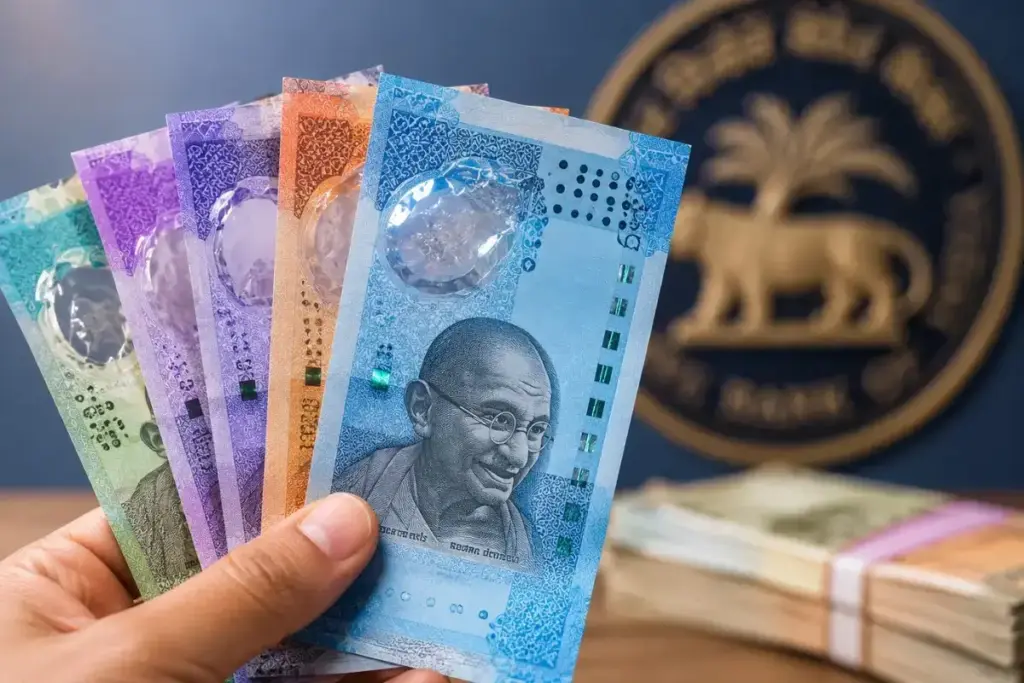
The Reserve Bank of India (RBI) is all set to launch its first pilot project for plastic—that is, polymer—bank notes in the country. According to media reports, this is the next step in RBI’s plan to introduce new generation currency notes in the country.
**Trial will start with ₹10 and ₹20 notes**
In the initial phase, the Reserve Bank will start testing these with lower denomination notes. Official sources say the first pilot project is expected to start with ₹10 and ₹20 notes. RBI will take future decisions based on the results and information received from this trial. If the trial is completely successful, then RBI can start issuing these polymer notes on a large scale across the country from 2027.
**Along with new notes, old paper notes will also remain in circulation**
The introduction of polymer notes in the Indian market does not mean that existing paper notes will immediately go out of circulation. RBI has clarified that the new currency will not replace the old paper notes.
**Moving together:** Both polymer and paper notes will move together in the market.
**Step-by-step change:** This change will happen gradually and in phases.
**Continuous Circulation:** Till the time the new notes are completely put into circulation, the paper notes will also remain in circulation.
**RBI issued global tender**
Preparations for this project gained momentum when the note printing unit of RBI issued a global ‘Expression of Interest’ (EOI). In this tender, applications have been sought for the manufacturing and supply of special ‘polymer substrate sheet’ used for printing these notes. According to the documents, manufacturers from across the world have been invited to supply polymer substrate with advanced security features. The last date for submitting bids under this tender has been fixed as August 18. The new notes will not be completely tear-proof; But they will be protected from water and dust.
Polymer notes are much more durable than traditional paper notes. They do not get spoiled even after coming in contact with water, dirt and dust and do not tear easily. As a result, they remain clean and in use for a long time without any damage. Another big advantage of polymer sheets is that advanced security features can be easily incorporated into them. This makes it almost impossible to make fake notes, which strengthens the security system of the country.
Polymer notes are already being used in many big countries
Polymer notes have been in use for a long time in many developed countries such as Australia, Canada, the United Kingdom (UK) and New Zealand. RBI had earlier shown interest in introducing polymer notes to improve the strength and quality of the currency. The upcoming pilot project will be its first test in the real world. However, RBI has not yet issued any official statement regarding this.
What are polymer notes?
Instead of paper, these notes are printed on a special plastic material called polymer substrate. Even though they may seem as light as ordinary notes, they do not get damaged when wet and are more durable.
What is ‘Expression of Interest’?
This is a kind of global tender document through which the Reserve Bank invites experienced and qualified companies from around the world to submit proposals for the project, in which they provide information about their capabilities, technology and price.